Solutions
Executive chauffeur service planned around the executive's calendar
We coordinate professional chauffeured transportation for senior leaders and their guests in cities across the US. Each booking is planned around the schedule, the people and the building access involved.
Updated
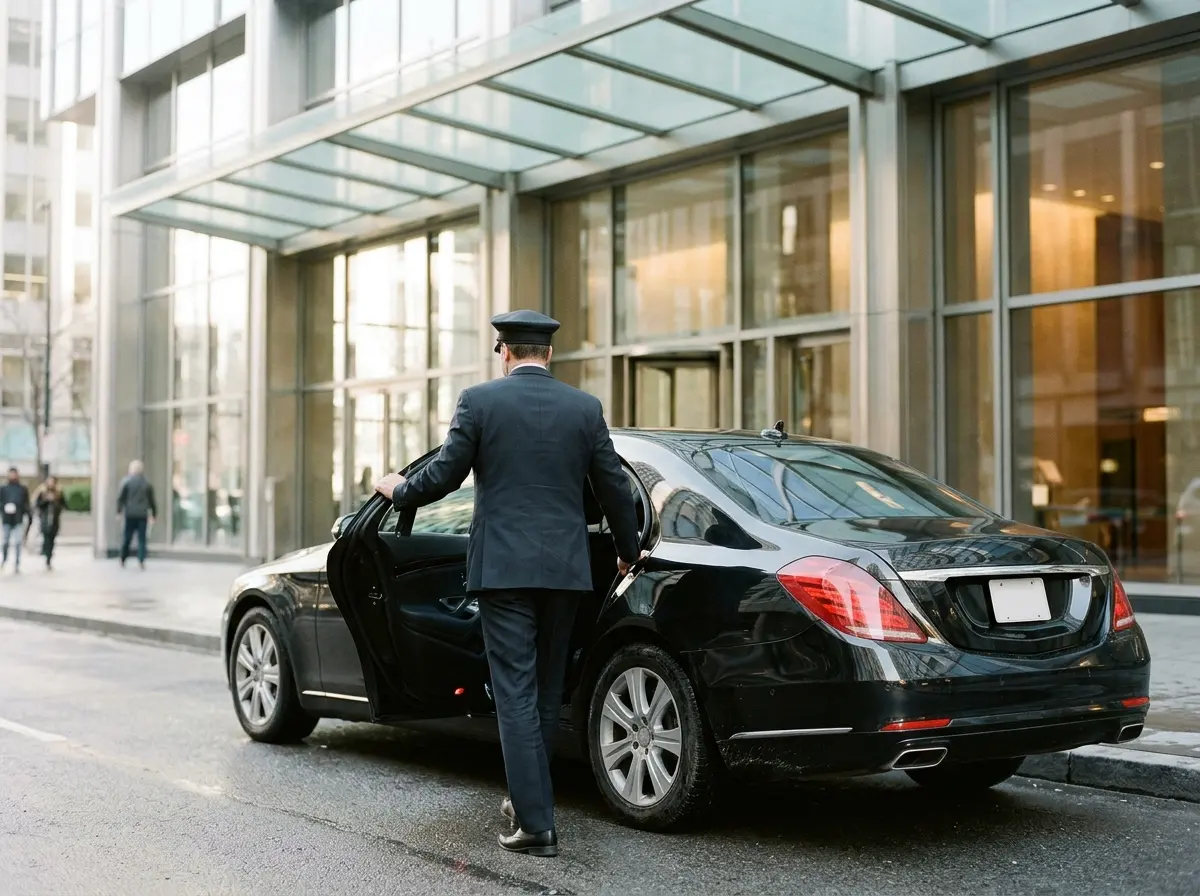 Illustrative image
Quick answer
Executive chauffeur service is pre-booked, professionally driven transportation for senior leaders, board members and their guests, planned around the day's meetings rather than a single ride. Corporate Travel USA coordinates it nationally, using owned operations or vetted local partners confirmed for each market, with a briefed driver and a named contact for changes. Pricing is by proposal, based on vehicle, hours and market.
How it works
How executive chauffeur service works
An executive chauffeur booking is not a ride request. It is a small operation: a driver who knows who is in the back seat, a route that respects the meeting times, a pickup point that works for the building, and a plan for what happens when the schedule moves.
Corporate Travel USA coordinates this service across the US. Service in a given market is delivered by owned operations or qualified local transportation partners, and we confirm who will run it for your dates at proposal stage. We do not assume the same provider is right for every city.
Most requests come from executive assistants and chiefs of staff, who care about two things: the executive is never left waiting, and nobody has to chase the driver. We build the brief around those two things, including a named point of contact on the day and a clear instruction set for the chauffeur.
Where the need is a recurring one, such as a leader who is driven every week, we scope it as a program rather than a series of one-off bookings. That is covered under executive transportation retainers.
Corporate chauffeur service: where it fits
Board and leadership meetings
Directors arriving from different airports to one boardroom, with pickups sequenced so the first arrival is not left sitting in a lobby for two hours.
Executive travel days
Home or office to airport, and airport to the first meeting, with the driver tracking the flight and the calendar rather than a fixed pickup time.
Investor and client visits
A visiting senior guest met by a chauffeur who has their name, flight details and the day's itinerary, and who can adjust when a meeting overruns.
Multi-stop executive days
Back-to-back meetings across a metro area, with a vehicle held between stops so the executive can take calls and reset between appointments.
Newly appointed leaders and relocations
Interim transportation for an executive in their first weeks in a new market, before a regular arrangement is set up.
What we plan for in executive chauffeur service
The vehicle is the easy part. These are the operational details that decide whether the program runs on time.
- 01
Vehicle class and passenger privacy
Sedans suit one or two passengers with luggage. SUVs add space and ground clearance for winter markets. Sprinter-class vans suit a leader travelling with a small team and working in the vehicle.
- 02
Driver briefing
We send the chauffeur the passenger name, pickup and drop-off details, flight number if relevant, and any instruction on greeting, conversation and confidentiality. Tell us if the executive prefers a quiet ride.
- 03
Building access and pickup points
Many office towers and hotels restrict curb access. We ask for loading dock, garage and lobby details in advance so the driver is not improvising at the entrance.
- 04
Timing and buffers
We plan buffers around known risks such as peak commute windows, security lines and event traffic. The buffer is proposed with the itinerary, not applied blindly.
- 05
Changes on the day
Meetings run over and flights move. Agree early who can authorise a change and how the driver is told, so the plan keeps up with the calendar.
What does an executive chauffeur service include?
An executive chauffeur service includes a pre-booked vehicle in an agreed class, a professional driver briefed on the passenger and the day, timing planned around meetings and flights, and a named contact who handles changes while the trip is live. Corporate Travel USA writes each of these into the proposal, so what is included is agreed before the trip rather than discovered on the invoice.
The brief is the part most buyers underestimate. A driver who knows the passenger's name, the building's pickup rules and which meeting is likely to overrun behaves very differently from one who only has an address and a time. The table below sets out the brief prepared for each booking; the more of it you can fill in, the fewer calls anyone has to make on the day.
Some elements are scoped per trip rather than included by default: waiting time between meetings, a greeter inside the terminal where the airport allows it, and flight monitoring on airport legs. Program features such as consolidated invoicing or cost-centre reporting are options scoped in a proposal. Self-drive rental is not offered: every booking comes with a professional driver.
| Brief item | Why it matters |
|---|---|
| Passenger name and how to greet them | The driver identifies the right person without calling the office, and greets them the way the executive prefers. |
| Pickup point and building access | Garages, loading docks and lobby rules decide where the car can wait. Guessing at the entrance costs minutes. |
| Flight number for airport legs | The pickup follows the actual arrival, not the time on the original itinerary. |
| The day's itinerary and likely overruns | The driver positions for the next leg and knows which meeting may run long. |
| Conversation and privacy preferences | A quiet ride, no small talk if not wanted, and discretion about anything overheard. |
| Who can authorise changes | One named person can approve a new pickup time or an extra stop without delay. |
Related:Transportation standardsExecutive transportation retainers
How is executive chauffeur service priced?
Executive chauffeur service is priced by proposal from four inputs: the vehicle class, the time the car and driver are committed (including waiting), the market and date, and the trip pattern, meaning single transfers, a block of hours or a recurring schedule. Corporate Travel USA does not publish rates, because the same request is priced differently in different cities and on different dates.
A quote is built leg by leg. A transfer is priced from pickup to drop-off, usually with a minimum; an as-directed block is priced by the hour, usually with a minimum number of hours. Airport fees, parking, tolls and waiting beyond an agreed grace period are common extras, and how gratuity is handled varies by operator. Ask for each of them to be itemised in the quote, so the invoice matches what was approved.
Illustrative example, not a quote: an executive has meetings at 9:00, 11:30 and 15:00 across one metro, then a 17:30 flight. Booked as four separate transfers, each leg carries its own minimum and the car repositions between them. Booked as an as-directed block from 8:30 to 16:30, the car is held throughout and the executive can leave materials in it. Which costs less depends on local minimums and the gaps between meetings, so the proposal can price both structures side by side.
| Cost driver | What raises it | How to keep it predictable |
|---|---|---|
| Vehicle class | Larger or luxury classes; a specialist vehicle in a smaller market | Choose the smallest class that fits the passengers and bags |
| Time committed | Waiting between meetings; open-ended returns | Share the agenda and agree when the car is held or released |
| Market and date | Major events, holidays, late nights and thin local supply | Book as early as the itinerary allows; accept an equivalent class |
| Trip pattern | Many separate one-way bookings | Group legs into a block, or a program if the pattern repeats |
| Extras | Airport fees, parking, tolls, extra waiting | Ask for each to be itemised in the quote |
Executive car service or private chauffeur service: which do you need?
Book executive car service, meaning point-to-point transfers, when the day has a few fixed legs with long gaps between them. Book a private chauffeur service, meaning a car and driver held for a block of hours, when the schedule has several stops, short gaps, uncertain end times or a need to work in the vehicle. Corporate Travel USA can quote both structures for the same itinerary.
The two terms overlap in everyday use, so it helps to describe the day rather than pick a label. Tell us where the executive needs to be and when, and which parts could move. These rules of thumb are a starting point for the conversation, not a pricing formula.
Whichever structure you choose, the brief stays the same: who the passenger is, the pickup rules at each building, the itinerary, and the person who approves changes.
- Two or three legs with gaps of several hours: transfers are the natural fit.
- Three or more stops in one metro, or gaps of around 90 minutes or less: price a held car as well.
- A meeting with no firm end time: an on-call return or a held car, not a fixed pickup.
- Calls, documents or a change of clothes in the car between meetings: a held car.
- The same pattern on several consecutive days: an hourly or dedicated chauffeur arrangement.
How to vet a chauffeur service for executive travel
Vet a chauffeur service on four things: its authority to run the trip, its insurance, how it selects and supervises drivers, and how it handles changes and incidents. Corporate Travel USA confirms the operator for each market at proposal stage, and insurance certificates for that operator are available on request.
For trips that cross state lines, FMCSA says companies transporting passengers in interstate commerce for compensation generally need interstate operating authority (an MC number) in addition to a USDOT number. FMCSA also requires a USDOT number for interstate operations using vehicles designed or used to carry more than 8 passengers, including the driver, for compensation. A carrier's registration and safety record can be looked up by USDOT number, MC number or company name on FMCSA's free SAFER Company Snapshot. Trips inside one state are licensed by state and local authorities, including airport permit programs, and those rules vary by market.
If the service includes regular home-to-office rides, involve payroll as well as procurement. IRS Publication 15-B explains that fringe benefits are taxable unless the law specifically excludes them, and covers how commuting benefits are treated, so ask your tax adviser how a standing commute should be handled.
- Registration: USDOT and MC numbers for interstate work, checked on SAFER; state or local for-hire licensing for local work.
- Insurance: a current certificate for the operator, with limits your risk team accepts.
- Drivers: how they are screened, trained and supervised, and the operator's policy on driver hours.
- Vehicles: the maintenance policy, and what happens if the assigned vehicle is out of service.
- Incidents: who calls whom, how quickly, and how it is documented afterwards.
- Data: who sees passenger details and how long they are kept.
Vehicle categories
Vehicles for executive chauffeur service
Categories, not guarantees. Availability varies by market and is confirmed in your proposal.
Executive Sedans
Typically 1-3 passengers
Chauffeured business-class sedans for individual executives and small teams on airport, meeting and city-to-city runs.
Luxury Sedans
Typically 1-3 passengers
A higher vehicle category, always chauffeured, for senior executives, board members and VIP guests where presentation matters.
Executive SUVs
Typically 1-6 passengers depending on SUV class and luggage
Chauffeured business SUVs for small teams, extra luggage and travelers who want more space.
Luxury SUVs
Typically 1-6 passengers depending on SUV class and luggage
A premium, chauffeured SUV category for VIP guests, delegations and executives who need space and presentation.
Executive Sprinter Vans
Typically 9-14 passengers depending on configuration
Chauffeured Sprinter-class vans that keep a mid-size team together on airport runs, offsites and meeting days.
How an executive chauffeur service booking works
- 1
Share the itinerary
Send dates, cities, passenger details, pickup points and any preferences. A partial itinerary is fine; we flag what is missing.
- 2
We confirm the market
We identify the operator for each city and check vehicle class and timing against your request. Anything we cannot confirm is stated plainly.
- 3
Proposal and brief
You receive a proposal covering vehicles, coverage windows and pricing by quote. Once approved, we prepare the driver brief and a day-of contact plan.
- 4
Day-of coordination
We stay reachable for changes during the trip, and review how it went so the next booking starts from what we learned.
Executive chauffeur service: procurement and billing
- Pricing is provided by proposal and depends on market, vehicle and hours.
- Purchase order numbers and cost-centre references can be recorded on bookings; reporting options are scoped in the proposal.
- Insurance certificates are available on request for the operator assigned to your market.
- Passenger details are used only to deliver the trip and are shared with the assigned operator on a need-to-know basis.
Executive chauffeur service FAQs
Is an executive chauffeur the same as a black car or rideshare?
No. A chauffeured booking is planned in advance, with a named passenger, a brief for the driver and a contact for changes. Rideshare matches whoever is nearby when you request. Our comparison of executive transportation and rideshare sets out where each one fits.
Can you provide the same chauffeur every time?
Often that is the aim, but it depends on the market and operator. If consistency matters, say so in the request and we will scope a retainer or dedicated arrangement instead of one-off bookings.
Which cities can you cover?
We coordinate across the US, but coverage is confirmed per market and per date at proposal stage. Smaller markets may need more notice.
Can the chauffeur wait between meetings?
Yes, as an hourly or as-directed booking scoped in the proposal. Tell us the likely duration and the gaps between meetings so we can plan the vehicle and driver hours, and compare it with separate transfers.
How do I book for several executives in different cities?
Send one itinerary covering all legs. We propose operators per city and consolidate the paperwork where possible.
How far in advance should we book?
As soon as the itinerary is known, even if it is incomplete. Sedans in large metros are usually the easiest to confirm; SUVs, Sprinter-class vans, smaller markets, late nights and major-event dates need more notice. Short-notice requests are handled separately and depend on availability.
Can the chauffeur keep conversations confidential?
Confidentiality expectations go into the driver brief, and you can ask for the operator's confidentiality policy in writing. Whether drivers sign a client-specific non-disclosure agreement depends on the operator and is confirmed per market before the booking.
Is a company-paid commute a taxable benefit?
It can be. IRS Publication 15-B, the employer's guide to fringe benefits, treats fringe benefits as taxable pay unless the law specifically excludes them. Ask your payroll or tax adviser before setting up regular home-to-office rides; trip records in an agreed format can be scoped in the proposal.
Sources and references
- Get Operating Authority (Docket Number), Federal Motor Carrier Safety Administration (FMCSA)
- Do I Need a USDOT Number?, Federal Motor Carrier Safety Administration (FMCSA)
- SAFER Web: Company Snapshot, Federal Motor Carrier Safety Administration (FMCSA)
- Publication 15-B, Employer's Tax Guide to Fringe Benefits, Internal Revenue Service
Next step
Get a quote for this trip
Share the itinerary and we will come back with a quote. Two short steps.
We do not publish a response-time promise until it is operationally confirmed. Time-sensitive request? Say so in the notes.
Start your request
Related executive services
- Executive Transportation RetainersA standing arrangement for executive chauffeured transportation, planned around leadership calendars and scoped by proposal.
- Hourly & Dedicated ChauffeurHourly chauffeur service: a car and driver held as directed for a day, or one dedicated chauffeur for a week of visits.
- Corporate Airport TransfersAirport car service for business travelers: flight-tracked pickups, a clear meeting point at the terminal and a plan for delays.
- VIP Delegation TransportationProtocol-aware transportation for executive delegations and visiting dignitaries, with discreet vehicles and security coordination.
- Resources executive transportation vs rideshare
- Fleet executive suvs