Industries / Healthcare and Life Sciences
Healthcare corporate transportation for pharma, biotech and device teams
Pharma, biotech, device and health system teams move clinicians, investigators and staff under rules that limit what can be offered and recorded. We plan corporate transportation to fit, and we do not provide patient or medical transport.
Updated
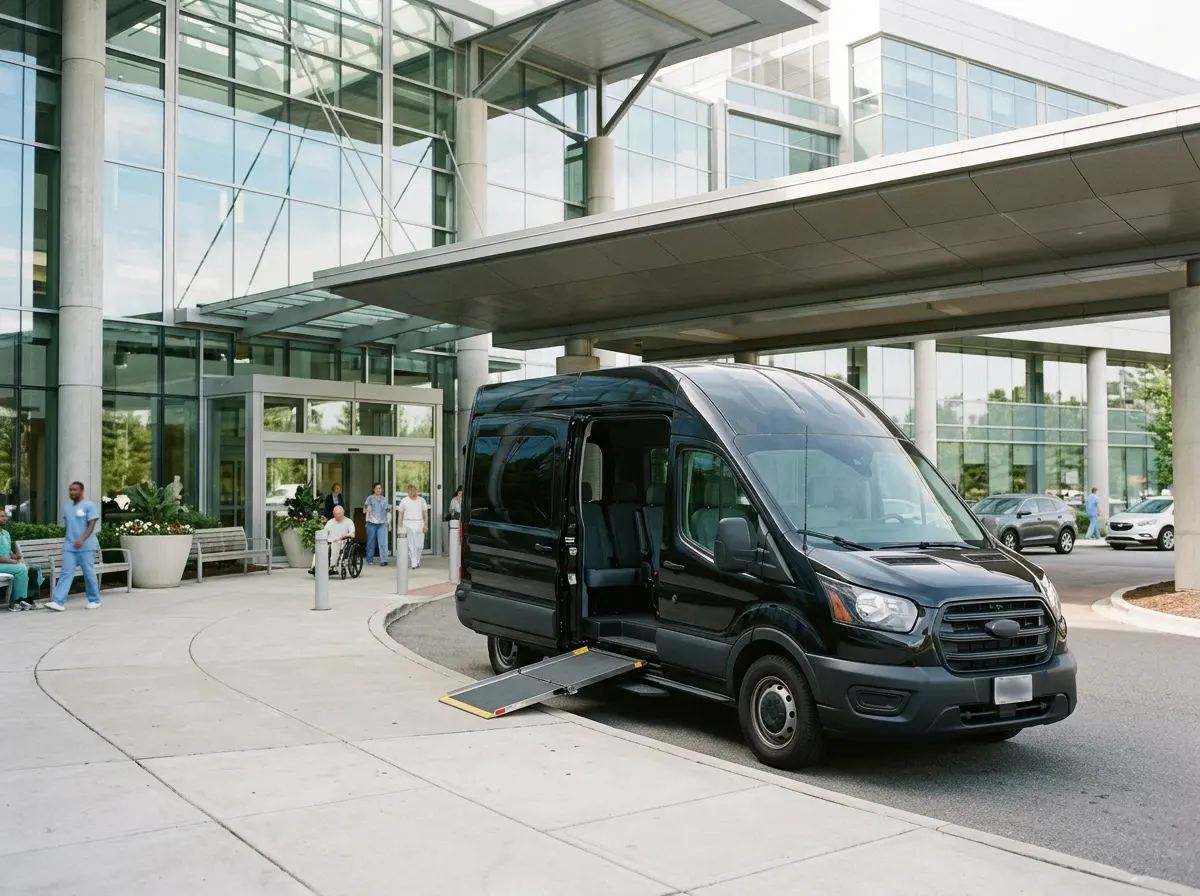 Illustrative image
Quick answer
Healthcare corporate transportation is business ground transportation for pharmaceutical, biotech, medical device and health system organizations: investigator meetings, advisory boards, medical conferences, field-team and executive travel. It is not patient or medical transport. Corporate Travel USA coordinates it nationally through owned operations or vetted local partners confirmed per market, with event-level trip records as a program option. Pricing is by proposal.
The transportation problem
Healthcare and Life Sciences: the transportation challenge
Transportation in life sciences is constrained by what the company is allowed to provide. Pharmaceutical and device companies follow internal codes and industry guidelines about value given to health care professionals, which is why a ride to a dinner or an advisory board has to be defensible, documented and in proportion. Transportation for clinicians is rarely a casual courtesy. Teams typically want clear records of who was moved, why, and under which event.
Events drive most of the demand. Investigator meetings bring trial site staff from across the country to one hotel for two days. Advisory boards gather a small group of specialists in a boardroom. Speaker programs and medical education events move groups between hotels and venues in the evening. Each has a different scale and a different compliance footprint, and a group transfer after a long scientific day needs to start on time.
Health systems have corporate needs of their own: staff shuttles between hospital campuses and remote employee parking, board and leadership travel, and recruitment visits where a physician candidate tours the hospital and the community. These are business trips for employees and guests. Patient, caregiver and clinical transport, including non-emergency medical transportation, is outside our scope, and we say so plainly during scoping.
Healthcare and Life Sciences: typical use cases
Investigator meetings
Trial site staff arriving from many airports, moved to one hotel, then to dinner and back, on a meeting schedule.
Advisory boards and speaker programs
Small groups of specialists transferred to boardrooms or dinners, with attendee records kept for event compliance.
Medical congresses
Booth, medical affairs and leadership teams moved around a major society meeting, alongside the society's own attendee shuttles.
Health system staff shuttles
Employee shuttles between hospital campuses, research sites and remote parking.
Physician and leadership recruitment visits
Airport pickups and community tours for candidates, coded to the recruiting budget.
Executive and board travel
Recurring airport transfers for leadership of pharma, biotech, device and health system organizations.
Booking and procurement for healthcare and life sciences
The vehicle is the easy part. These are the operational details that decide whether the program runs on time.
- 01
Event-level documentation
Agree what each trip record includes: event name, passenger list, date, time and cost. Your compliance team defines what is required.
- 02
Spend limits
Share transportation caps and rules for guests so the plan stays within them. We do not interpret industry codes or give legal advice.
- 03
Privacy handling
Keep study names, unannounced product names and attendee specialties off driver manifests. Limit passenger information to what dispatch needs.
- 04
Accessible vehicles
Wheelchair-accessible vehicles must be requested early, since availability varies by market and is confirmed at proposal stage.
- 05
Scope boundary
We coordinate non-emergency corporate transportation for employees and business guests only, not patient, clinical or medical transport.
Medical conference transportation for life sciences teams
Medical conference transportation for a life sciences company usually has three layers at the same congress: the company's own booth, medical affairs and commercial staff; faculty, consultants and advisory board members the company is permitted to host; and executive or investor meetings on the margins. Each layer has different rules on what the company may pay for and what must be recorded.
Large medical society meetings often run their own shuttle system between official hotels and the convention center for registered attendees, so a company rarely needs to duplicate it. The company's effort goes into what the society does not cover: staff moves at the start and end of exhibit hours, an advisory board held in a hotel across town, an evening symposium, or a leadership team moving between investor meetings.
Investigator meetings follow the same logic on a smaller scale: site staff arriving on many flights into one hotel, a two-day agenda and an evening event. Accessible vehicles belong in the first brief. DOT rules let charter coach (over-the-road bus) operators ask for up to 48 hours' advance notice to provide an accessible bus, so late requests are harder to meet.
| Group | Typical vehicles | Agree up front |
|---|---|---|
| Booth, medical affairs and commercial staff | Shared vans or a coach from the company hotel | Departure times around exhibit hours |
| Faculty, consultants and advisory board members | Sedans, SUVs or a van | Whether the company may pay, and the record compliance needs |
| Evening program or symposium attendees | Coaches or minibuses | Who is eligible to ride under your policy |
| Executives and investor meetings | Sedans and SUVs, as directed | Confidential schedule and minimal manifest detail |
Related:Conference transportationConvention shuttle servicesGroup airport transfers
How is passenger information protected on healthcare business trips?
Passenger information is protected by collecting less of it: the driver manifest carries a first name or booking reference and a pickup point, while names, employers, specialties and the event or study name stay in a separate trip record that only your designated contacts receive.
In life sciences, the sensitive data is usually commercial rather than clinical. The list of specialists attending an advisory board can reveal a launch plan. An unannounced compound or study name on a meet-and-greet sign is a disclosure. An executive schedule during a deal is market-sensitive. Because these trips carry employees and business guests, not patients, bookings should never contain patient health information; a request that needs it is outside our scope.
Handling rules are agreed before the first trip and written into the program:
- Neutral meet-and-greet signs: a guest name or event code, never a study or product name
- Each driver sees only their own pickups, not the full attendee list
- Trip records go only to named contacts on your side
- Retention and deletion of passenger data agreed in advance
- Changes to sensitive bookings confirmed through the coordinator
Does transportation for health care professionals have to be reported?
It can be. Under the federal Open Payments program, drug and medical device companies report certain payments and transfers of value to covered recipients such as physicians, and CMS lists travel and lodging, defined to include costs such as airfare, mileage and cab fare, among the reported natures of payment. Whether a specific ride is reportable is a decision for your compliance team.
The practical consequence is that a transportation record has to be attributable to individual people, not just to an event. A single invoice line for an advisory board shuttle is not enough if your team needs to assign a value to each physician who rode.
Illustrative: a minibus carries 18 advisory board participants from a hotel to a meeting venue and back. If your policy allocates shared transportation per rider, the record needs the vehicle cost, the passenger list for each leg and the allocation method your team chose. Building that into the booking takes far less effort than reconstructing it from a monthly invoice.
Corporate Travel USA does not decide reportability, file reports or hold any compliance certification. We can scope trip records in the format your team specifies.
Related:Corporate billing and invoicingGround transportation budgeting
Vehicle categories
Vehicles life sciences teams typically book
Categories, not guarantees. Availability varies by market and is confirmed in your proposal.
Executive Sprinter Vans
Typically 9-14 passengers depending on configuration
Chauffeured Sprinter-class vans that keep a mid-size team together on airport runs, offsites and meeting days.
Minibuses
Roughly 20-35 passengers depending on vehicle type and layout
Chauffeured minibuses for groups of roughly 20-35: conference loops, offsites, employee routes and airport groups.
Executive Sedans
Typically 1-3 passengers
Chauffeured business-class sedans for individual executives and small teams on airport, meeting and city-to-city runs.
Motorcoaches
Roughly 47-56 passengers per full-size coach
Chauffeured charter buses for large groups, conventions, offsites and multi-city movements, quoted per itinerary.
How a life sciences transportation program is set up
- 1
Define the event type
Investigator meeting, advisory board, congress, dinner or staff shuttle, each with its own needs.
- 2
Set recordkeeping and caps
We align trip records and spending boundaries with your compliance guidance.
- 3
Check access needs
Accessible-vehicle requests and sensitive bookings are flagged early.
- 4
Coordinate and document
Trips are coordinated, with event-level records provided as agreed.
Trip records, billing and vendor onboarding
- Event-level and per-passenger trip records, scoped in the proposal
- Vendor onboarding documents and insurance certificates on request
- Invoicing by event, brand team or cost center where required
- Confidential handling of passenger information agreed before service
Healthcare corporate transportation FAQs
Do you provide medical or patient transport?
No. We coordinate non-emergency corporate ground transportation for employees and business guests only. Patient transport, non-emergency medical transportation and emergency services are outside our scope.
Can you accommodate wheelchair-accessible needs?
Yes, we request accessible vehicles when a group needs them. Availability varies by market, and charter coach operators may ask for up to 48 hours' notice to provide an accessible bus, so tell us in the first brief.
Can trip records support our compliance documentation?
We can scope event-level and per-passenger trip records, such as event name, date, passenger list and per-trip cost. Your compliance team decides what is required, and we claim no certification.
Can you handle an investigator meeting with attendees on many flights?
Yes, we plan group arrivals from the manifest and run shuttle loops. Coverage in the meeting city is confirmed in the proposal.
Can health systems use this for staff shuttles or recruitment visits?
Yes. Staff shuttles between campuses and remote parking, leadership travel and physician recruitment visits are corporate transportation. They are planned as workforce or guest programs and confirmed per market.
Sources and references
- What is Open Payments?, Centers for Medicare & Medicaid Services (CMS)
- Open Payments: Natures of Payment, Centers for Medicare & Medicaid Services (CMS)
- 49 CFR 37.189, Service requirement for OTRB demand-responsive systems, Electronic Code of Federal Regulations (eCFR)
Next step
Discuss a corporate account
A short qualification so the right person can prepare a consultation or proposal.
We do not publish a response-time promise until it is operationally confirmed. Time-sensitive request? Say so in the notes.
Start your request
Related services for healthcare organizations
- Conference TransportationHotel-to-venue shuttles, airport arrivals and session-driven peaks planned for multi-day conferences.
- Group Airport TransfersArrival-wave management for groups: flight tracking, staging, meet-and-greet and timed departures to the venue.
- Corporate Event TransportationPlanned ground transportation for corporate events: routes, loading zones, manifests and a dispatcher on the day.
- Workforce TransportationEmployee transportation for shift-based, plant, remote-site and temporary workforces, scoped around operating schedules rather than office hours.
- Resources transportation duty of care