Events and groups
Crew transportation services built around the call sheet
Crews run on call sheets, not on convenience. We plan shuttles, talent vehicles and base camp moves around the call sheet and keep driver hours in view.
Updated
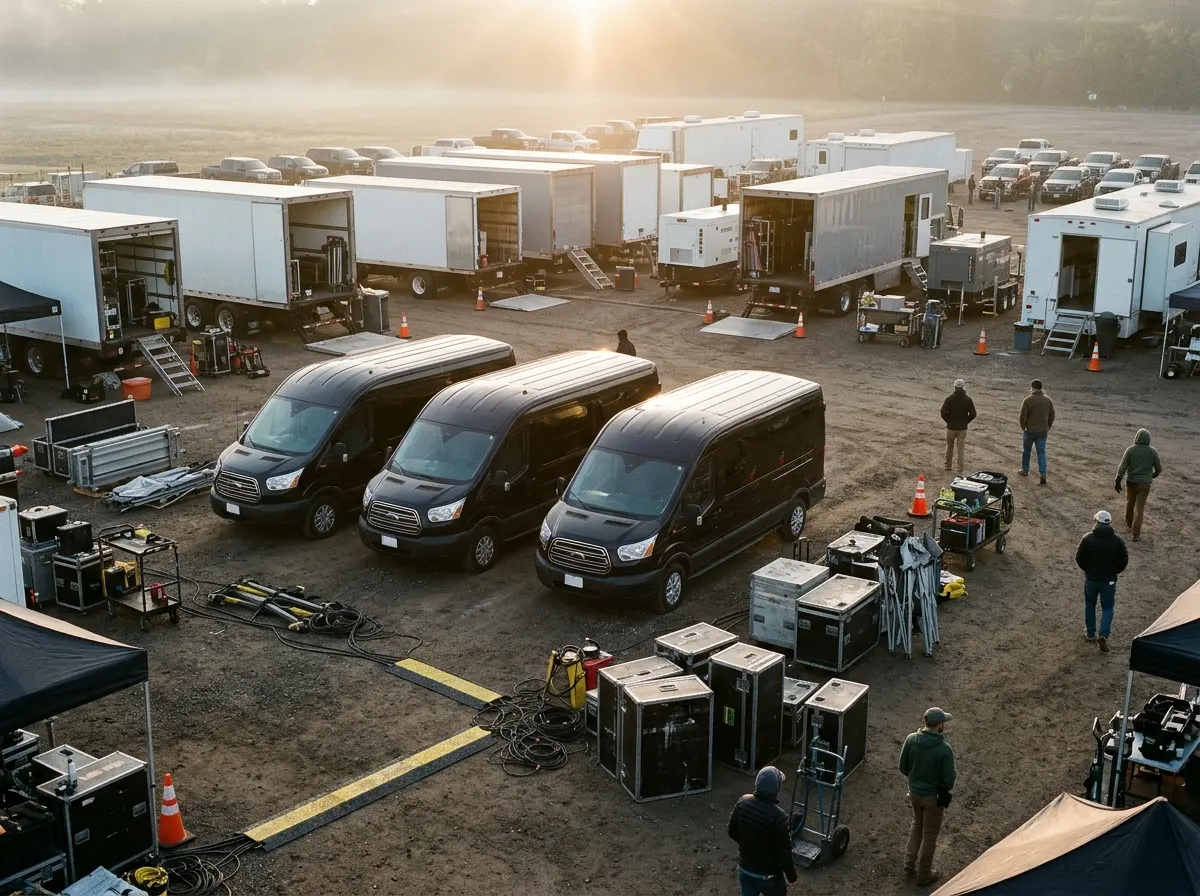 Illustrative image
Quick answer
Crew transportation services move production crews, technical staff and talent between hotels, base camps, sets, venues and airports on a schedule driven by the daily call sheet. They suit shoots, live events and broadcast productions. Corporate Travel USA plans pickups from call times and coordinates delivery through owned operations or qualified local partners confirmed per market. Pricing is by proposal.
How it works
How crew transportation services work
Production schedules start earlier and end later than most corporate programs. A call time at 5:30 a.m. means crew pickups well before that, and wrap may land at midnight. Transportation has to work with that rhythm, and it has to adapt when the schedule shifts, which on production it often does.
The structure is usually three layers. A crew shuttle moves most of the team between the hotel, the base camp or parking lot, and the set. Talent and principals travel separately in smaller vehicles, often with a driver assigned to a person or small group. A flexible layer of vans and sedans handles runs, early departures and unplanned moves.
The call sheet is the controlling document. We plan from the call sheet and update the plan when a revised sheet arrives. Because a late wrap can leave drivers beyond their legal and safe working hours, the plan includes relief drivers or split shifts. Driver-hour rules vary by jurisdiction and operator, so we confirm them with the supplier per market. Our scope is passenger transportation, not equipment or set freight.
Crew transportation services: where they fit
Corporate video and commercial shoots
Crews and talent move from hotel to set across a few days. Small vans and an exec SUV for the principal are typical.
Live event and broadcast production
Load-in crews, technical staff and talent have different call times and venues. Separate shuttles serve each.
Concert and tour support
Crew and production staff move between hotel, venue and airport on a tour day schedule.
Studio and location base camp shuttles
Parking is far from set. A continuous shuttle moves crew from the parking area to base camp.
Wrap-day and travel-day moves
Crew departures and airport runs are timed to the wrap and the flight schedule.
What we plan for in crew transportation services
The vehicle is the easy part. These are the operational details that decide whether the program runs on time.
- 01
Call sheet integration
We take the daily call sheet and map every pickup to the earliest call time. Revised sheets trigger a revised plan.
- 02
Driver hours and relief
Early calls and late wraps create long driver days. We plan relief drivers or split shifts, with the specifics confirmed by the supplier.
- 03
Base camp and parking
Base camps often have limited or restricted access. We obtain location notes and permits information and brief drivers accordingly.
- 04
Talent vehicles
Talent or principal vehicles are kept separate and usually tied to named drivers. Privacy and access requirements are handled by instruction.
- 05
Schedule changes
Shoots slip. We agree how and when changes are communicated and what a day-of change costs.
How are call times turned into pickup schedules?
Call times are turned into pickup schedules by working backwards from the call: subtract the walk or shuttle from the drop point to set or base camp, the drive with a margin for traffic, and loading time at the hotel. The result is the latest pickup, and the schedule groups crew by department and call time.
Departments with earlier calls, such as hair, makeup and wardrobe or rigging, get their own earlier runs, and talent pickups are timed separately. When a revised call sheet arrives, the dispatcher reissues the pickup list and confirms it with each driver.
| Step | Time allowed | Clock time |
|---|---|---|
| Crew call at base camp | None | 6:00 |
| Drop at crew parking, then walk or shuttle to base camp | 10 minutes | 5:50 |
| Leave the hotel (drive including traffic margin) | 35 minutes | 5:15 |
| Crew at the hotel pickup point (loading) | 10 minutes | 5:05 |
Related:Multi-day eventsSprinter vans
Film crew transportation: how are company moves between locations handled?
A company move, when the whole unit relocates to a new location during the day, is handled as a planned wave: crew vans are staged before the last shot at the first location, the route and parking at the second location are confirmed in advance, and talent moves in separate vehicles.
The risk is timing. Moves rarely start at the scheduled minute, so drivers wait on standby near the first location and the dispatcher releases them on the call of whoever your production designates, not on a fixed clock time. Crew parking at the new location is often some distance from set and may need its own shuttle for the first hour.
- The order of departures by department
- The route, and an alternate
- Crew parking and base camp at the new location
- Who calls the move, and how drivers are told
- How talent and principals travel
Studio transportation and long production days
Studio transportation covers runs between hotels, airports and studio lots, where gate lists, drive-on passes and the distance from stages to parking set the rules. Long production days add a second constraint: the drivers' own hours.
Under FMCSA hours-of-service rules for passenger-carrying vehicles, a driver may drive at most 10 hours after 8 consecutive hours off duty and may not drive after 15 hours on duty. A long shoot day with an early call and a late wrap can exceed what one driver may legally cover, so the plan uses split shifts or relief drivers for wrap runs. FMCSA also tells planners never to ask a driver to make up lost time; when the schedule slips, the answer is another vehicle or driver.
If your production has a transportation coordinator or works under agreements that set who may drive, we plan within those rules. Tell us at the outset.
Vehicle categories
Vehicles for crew transportation services
Categories, not guarantees. Availability varies by market and is confirmed in your proposal.
Executive SUVs
Typically 1-6 passengers depending on SUV class and luggage
Chauffeured business SUVs for small teams, extra luggage and travelers who want more space.
Luxury SUVs
Typically 1-6 passengers depending on SUV class and luggage
A premium, chauffeured SUV category for VIP guests, delegations and executives who need space and presentation.
Executive Sprinter Vans
Typically 9-14 passengers depending on configuration
Chauffeured Sprinter-class vans that keep a mid-size team together on airport runs, offsites and meeting days.
Minibuses
Roughly 20-35 passengers depending on vehicle type and layout
Chauffeured minibuses for groups of roughly 20-35: conference loops, offsites, employee routes and airport groups.
Motorcoaches
Roughly 47-56 passengers per full-size coach
Chauffeured charter buses for large groups, conventions, offsites and multi-city movements, quoted per itinerary.
How a crew transportation engagement works
- 1
Schedule and locations
You send the shooting schedule, call sheets, locations and base camp information.
- 2
Crew and talent plan
We propose shuttle runs, talent vehicles, driver plan and reserve.
- 3
Daily sheet update
Each day's call sheet updates the plan, and the dispatcher confirms with drivers.
- 4
Run and wrap
A dispatcher follows the day and adjusts when schedules move or wrap runs long.
Crew transportation services: procurement and billing
- Pricing by proposal; early-call and late-wrap hours are scoped explicitly
- Production codes and cost reports can be scoped as a program option
- Insurance certificates on request for production insurers
- Confidentiality of talent movements is handled per instruction
Crew transportation services FAQs
Do you move equipment?
No. We provide passenger transportation. Equipment and set freight are outside our scope and are handled by production logistics providers.
Can you work with changing call times?
Yes, within the limits of driver hours and vehicle availability. We agree how late changes are communicated and what they may cost.
How much do crew transportation services cost?
The main drivers are vehicle hours across early calls and late wraps, the number of drivers needed to stay within hours-of-service limits, standby for company moves, talent vehicles and the number of shoot days. We price by proposal.
Can a driver stay with talent for the whole day?
Yes, a dedicated vehicle and driver can be scoped for a person or small group, within driver-hour limits. On long days a relief driver may take over the evening.
Can drivers sign NDAs?
Possibly, subject to supplier agreement in the market. Raise it at the proposal stage.
How does this differ from entertainment-industry accounts?
This page covers event and production crew moves. For ongoing studio or media company programs, see our entertainment and media industry page.
Sources and references
- Summary of Hours of Service Regulations, Federal Motor Carrier Safety Administration (FMCSA)
- Safety Tips (Travel Planners), Federal Motor Carrier Safety Administration (FMCSA)
Next step
Request an event transportation proposal
Tell us about the event, the movements and the passenger count. We will reply with a proposal for review.
We do not publish a response-time promise until it is operationally confirmed. Time-sensitive request? Say so in the notes.
Start your request
More like crew transportation services
- Entertainment and MediaTalent, executive, guest and crew transportation for studios, networks and live events, with changing call sheets and discreet pickups.
- Multi-Day Event TransportationDay-by-day fleet and driver planning for events that run several days across multiple venues.
- Corporate Event TransportationPlanned ground transportation for corporate events: routes, loading zones, manifests and a dispatcher on the day.
- Hourly & Dedicated ChauffeurHourly chauffeur service: a car and driver held as directed for a day, or one dedicated chauffeur for a week of visits.
- Fleet executive sprinter vans
- Request a proposal