Events and groups
Roadshow logistics for multi-city event tours
A multi-city event tour needs the same transportation quality in every market, with different suppliers and different venues. We build a repeatable city playbook and adapt it locally.
Updated
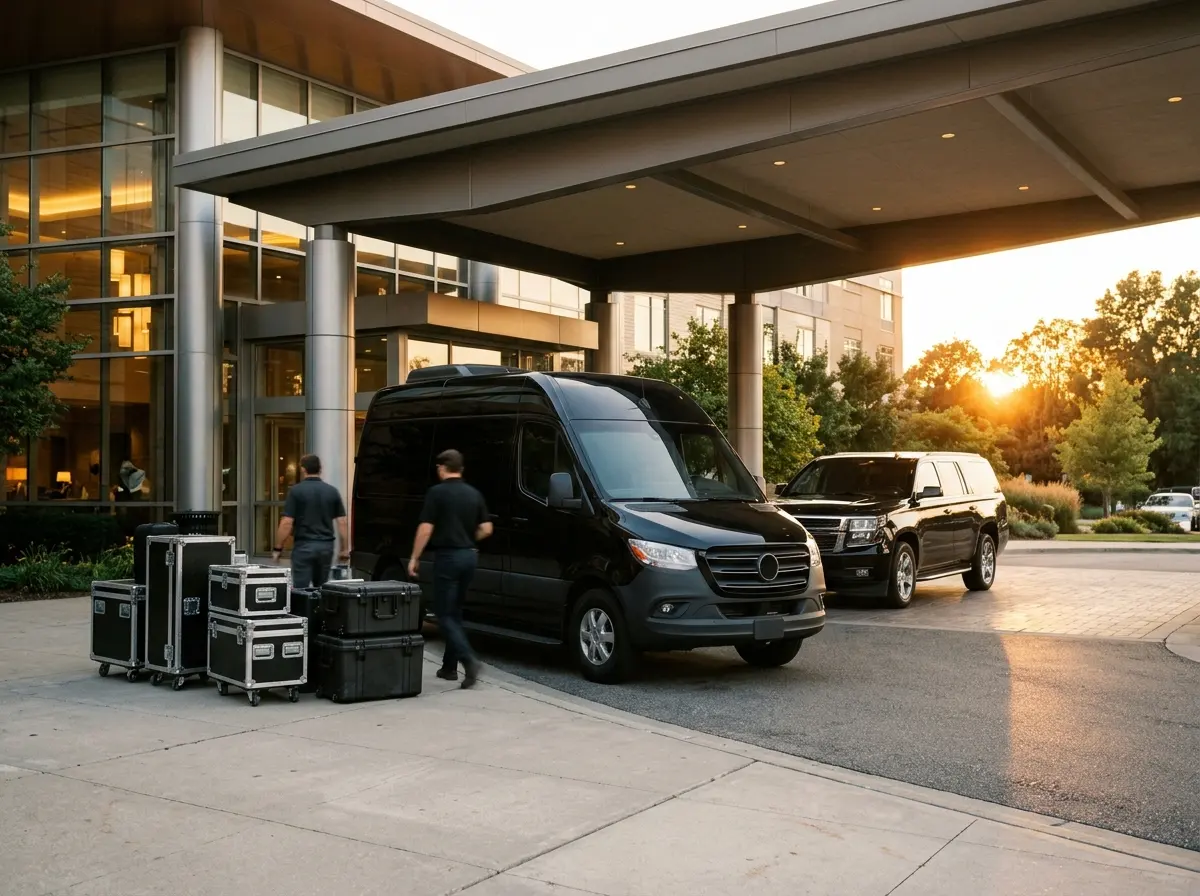 Illustrative image
Quick answer
Roadshow logistics is the ground transportation plan for an event tour: the same program repeated in several cities, with a traveling crew, local attendees and a different venue at each stop. Corporate Travel USA builds a repeatable city playbook, confirms owned operations or qualified local partners in each market, and coordinates the tour through one planning contact. Pricing is by proposal.
How it works
How roadshow logistics works
This page is about event tours: a series of events in different cities, such as a customer roadshow, a product tour or a regional summit series, where a team and a program repeat from city to city. The transportation challenge is repetition with variation. The format is the same but the venue, airport, supplier and local rules change every time.
We approach it with a city playbook. The playbook defines what a standard stop looks like: how the crew arrives, how attendees are moved, where vehicles stage, who the dispatcher is and what the reserve is. For each new city, we adapt the playbook to the venue and the local supplier, confirm supply, and brief the local drivers on the format.
Roadshow movements are often a mix of crew and attendees. The traveling crew needs hotel, venue and airport runs, often at early and late hours, and sometimes needs to move between cities overnight. Attendees need shuttles or vehicles from their offices or hotels. Both are coordinated by one planning contact, even though the suppliers differ by city.
This is different from executive roadshows, where the focus is moving a small number of senior executives between investor or client meetings. For that, see the corporate roadshows solution. Here the focus is on events and the crowds and crews around them.
Roadshow logistics: where it fits
Customer and partner roadshows
A company runs the same event in six to ten cities. The crew travels and local attendees are shuttled.
Product launch tours
A launch moves through regional markets. Load-in crews and demo teams need early starts and consistent drivers.
Regional summit series
Leaders present at events in each region, with local hotel blocks and venue transfers.
Training and certification tours
Trainers move between cities, with cohorts of local attendees transported to each session.
Trade or sales tours
A traveling team of sales staff and demo equipment moves from market to market with a fixed daily schedule.
What we plan for in roadshow logistics
The vehicle is the easy part. These are the operational details that decide whether the program runs on time.
- 01
City playbook
A one-page playbook sets the standard plan: roles, vehicle types, arrival and exit procedure. It is adapted for each city and kept consistent.
- 02
Supplier confirmation per market
Service in each city is delivered by owned operations or a qualified local partner, confirmed at proposal stage. Supply in smaller markets may need more lead time.
- 03
Crew movement between cities
Overnight moves, early flights and drive-between-cities legs are planned in the tour calendar. Where a city-to-city drive is needed, vehicle and driver hours are checked.
- 04
Consistent briefing
Local drivers receive the same briefing about the event format, dress, communication and escalation. Differences by venue are added.
- 05
Tour calendar and contingency
The tour calendar shows every move. If a city falls through or a date shifts, the plan for the next market can be adjusted.
How do equipment and people move between cities on a roadshow?
On a roadshow, people and equipment travel on separate tracks that meet at each venue. The crew usually flies or drives between cities and needs hotel, venue and airport runs at every stop, while staging and demo equipment travels by freight on its own schedule. We plan the passenger side and time it to the freight.
City-to-city drives need the most care. A long drive after a late load-out can push a driver past FMCSA hours-of-service limits for passenger-carrying vehicles, which allow at most 10 hours of driving after 8 consecutive hours off duty, so the plan may call for a second driver or an overnight stop.
- Hand-carry kits travel with the crew, so vehicles are sized for cases as well as people
- Freight arrival and load-in times set the crew's first run in each city
- Airport runs on travel days are timed to flights and to when load-out finishes
- Passenger vehicles do not carry staging freight; that stays with the freight provider
What goes in a roadshow city playbook?
A roadshow city playbook is a one-page standard for every stop: roles, vehicle types, arrival and exit procedure, staging, reserve and escalation. Each city gets the same playbook plus a local appendix, so a new supplier and new drivers deliver the same format.
After each stop, a short debrief updates the playbook, so the next city starts with the lessons from the last one.
- Roles: tour transportation lead, local dispatcher and on-site contact
- Crew movements: hotel, venue and airport, with first and last run times
- Attendee movements: shuttle or transfer model and vehicle mix
- Venue appendix: loading point, staging, access rules and accessible entrance
- Reserve, and what triggers its use
- Escalation: who to call when a run is late, and who can approve changes
Vehicle categories
Vehicles for roadshow logistics
Categories, not guarantees. Availability varies by market and is confirmed in your proposal.
Executive Sedans
Typically 1-3 passengers
Chauffeured business-class sedans for individual executives and small teams on airport, meeting and city-to-city runs.
Executive SUVs
Typically 1-6 passengers depending on SUV class and luggage
Chauffeured business SUVs for small teams, extra luggage and travelers who want more space.
Executive Sprinter Vans
Typically 9-14 passengers depending on configuration
Chauffeured Sprinter-class vans that keep a mid-size team together on airport runs, offsites and meeting days.
Minibuses
Roughly 20-35 passengers depending on vehicle type and layout
Chauffeured minibuses for groups of roughly 20-35: conference loops, offsites, employee routes and airport groups.
Motorcoaches
Roughly 47-56 passengers per full-size coach
Chauffeured charter buses for large groups, conventions, offsites and multi-city movements, quoted per itinerary.
How a roadshow logistics engagement works
- 1
Tour outline
You share the city list, dates, venues, crew size and expected attendance by city.
- 2
Playbook and supply
We draft the city playbook, confirm suppliers in each market and flag markets that need more lead time.
- 3
City-by-city brief
Each stop gets a local plan with a briefed dispatcher and drivers.
- 4
Tour dispatch and review
We coordinate each stop, log issues and apply lessons to the next city.
Roadshow logistics: procurement and billing
- Pricing by proposal; commonly structured per city with a shared tour framework
- A single invoice or consolidated billing across cities can be scoped as a program option
- Insurance certificates on request, per market supplier
- Vendor onboarding is done once for the program, not per city, where possible
Roadshow logistics FAQs
How is this different from corporate roadshows?
Corporate roadshows cover executive movements between meetings, often investor or client facing. Roadshow event logistics covers event tours: crews, attendees and venues across several cities.
Will the same drivers travel with us?
Usually not. Drivers are local to each market. We aim for consistency through a common playbook and briefing rather than through the same people.
Can you cover small cities?
We coordinate across the US, but supply varies by market and may need more lead time. We confirm each city in the proposal.
What if a city is added or cancelled?
The tour calendar is updated and we re-scope the affected city. Terms for cancellations are stated in the proposal.
How are roadshow logistics priced?
By proposal, usually per city within a shared tour framework: vehicle hours at each stop, crew runs, any city-to-city drives and their driver requirements, and lead time for smaller markets.
Sources and references
- Summary of Hours of Service Regulations, Federal Motor Carrier Safety Administration (FMCSA)
Next step
Request an event transportation proposal
Tell us about the event, the movements and the passenger count. We will reply with a proposal for review.
We do not publish a response-time promise until it is operationally confirmed. Time-sensitive request? Say so in the notes.
Start your request
More like roadshow logistics
- Corporate RoadshowsMulti-city ground transportation for roadshows, with a single plan and coordinated local operators in each stop.
- Long Distance Car ServiceLong distance car service between cities for teams and executives, when driving beats flying or no good flight exists.
- Corporate Event TransportationPlanned ground transportation for corporate events: routes, loading zones, manifests and a dispatcher on the day.
- Multi-Day Event TransportationDay-by-day fleet and driver planning for events that run several days across multiple venues.
- Resources managing multi city business travel
- Request a proposal