Events and groups
multi day event transportationMulti-day event transportation, planned one day at a time
Day three of an event never looks like day one. We plan each day separately, then manage driver hours, fleet rotation and schedule changes across the whole run.
Updated
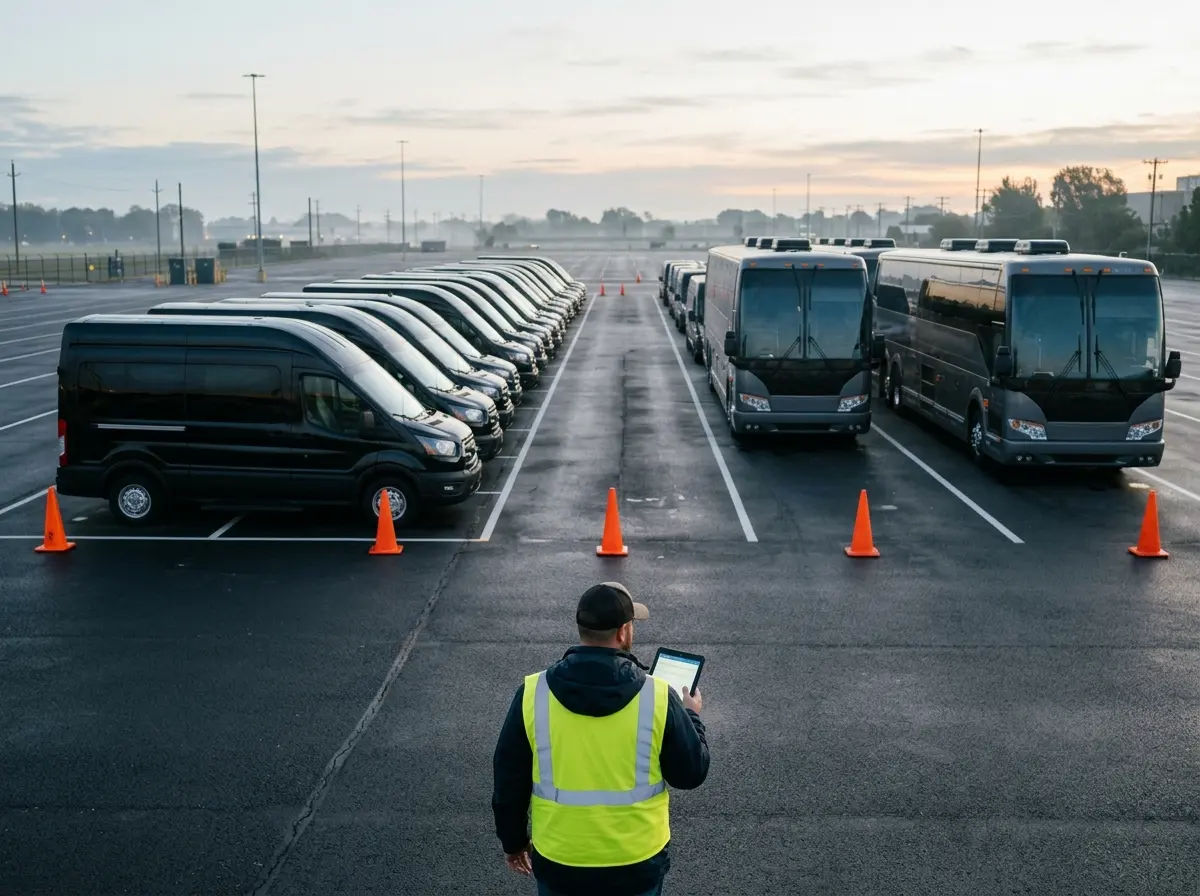 Illustrative image
Quick answer
Multi-day event transportation is a day-by-day plan of shuttles, transfers and vehicles for events that run several days, often across several venues. It suits conferences, incentive trips and executive programs. Corporate Travel USA builds a daily movement grid and driver plan, and coordinates delivery through owned operations or qualified local partners confirmed per market. Pricing is by proposal.
How it works
How multi-day event transportation works
In a multi-day event the transport requirement changes daily. Day one is an arrival surge. Day two may have a morning session, an afternoon off-site and an evening dinner. Day three may be a field visit or a short morning before departures. If the plan is built as a single template, it will be wrong on at least two of those days.
We build a day-by-day movement plan. Each day has its own vehicle allocation, pickup points and driver assignments. The plan is visible as a simple grid: day, time, route, vehicles, headcount. The grid is the document that your organizer, our dispatcher and the supplier all work from, and updates to it are logged.
A hidden constraint is driver hours. Drivers cannot work unlimited hours, and long event days with early starts and late finishes need relief drivers or split shifts. We raise this at proposal stage because it affects how many drivers, not just how many vehicles, the program needs. The requirement varies by jurisdiction and operator, and the supplier confirms it for each market.
Multi-day event transportation: where it fits
Three-to-five-day conferences
Changing session formats and evening events create different loads each day. Fleet scales up and down by day.
Incentive trips with activity days
Free days, group days and excursions. Vehicles are allocated to the planned activities and held in reserve for the rest.
Product training programs in one city
Cohorts rotate through a venue over several days. Shuttles follow the cohort schedule.
Sporting weekends and festival-style events
Arrival, event and departure days differ sharply. See sporting event transportation for stadium-specific planning.
Executive programs with parallel tracks
Senior attendees, spouses and speakers follow different schedules. Parallel plans keep each on time.
What we plan for in multi-day event transportation
The vehicle is the easy part. These are the operational details that decide whether the program runs on time.
- 01
Daily movement grid
A single grid lists every planned movement by day, time, route, vehicle and headcount. It is updated as the event changes and shared with the organizer.
- 02
Driver hours and relief
We ask the supplier for a driver plan, not just a vehicle count, because long days require relief or split shifts. The requirement is confirmed per market.
- 03
Fleet rotation
Vehicles need maintenance, refueling and cleaning between days. We schedule rotation so there is no gap when a vehicle goes off the line.
- 04
Daily brief and debrief
Each morning, a short briefing covers the day's grid, venue changes and lessons from the day before. The dispatcher records changes.
- 05
Change management
We agree who can authorize changes, how late the lock is each day and what happens to unused vehicle hours.
How do transportation schedules change day to day?
Transportation schedules on a multi-day event change because each day has a different shape: arrivals, sessions, an off-site evening, an excursion, departures. A plan that copies day one onto every day will be oversized on quiet days and short on busy ones.
Each day's grid lists time, route, vehicles, headcount and driver, and it is the single document your organizer, the dispatcher and the supplier work from. Each day also has a change cut-off; changes after it are logged and handled from that day's reserve.
| Day | Main movements | Peak | Indicative fleet shape |
|---|---|---|---|
| Day 1 | Airport arrivals in waves; welcome dinner | Afternoon arrivals, evening outbound | Minibuses and vans on arrival waves; coaches for dinner |
| Day 2 | Hotel to venue; off-site dinner | Morning peak; evening out and back | Coaches at the morning peak and for dinner; vans on call |
| Day 3 | Excursion or site visit; free evening | One morning departure, afternoon return | Coaches held for the excursion; small on-call pool |
| Day 4 | Morning session; departures | Check-out and airport surge | Coaches to the venue, then vans and minibuses on flight-based waves |
How is spare capacity handled across days?
Spare capacity on a multi-day event is set day by day and sized to that day's risk, rather than held as one fixed reserve for the whole event. A heavy day with tight session times carries more reserve than a free afternoon, and a reserve that goes unused one day does not automatically carry over to the next.
Illustrative guidance: on any day with a time-critical peak, hold at least one reserve vehicle of the largest class in use; keep a van on call for catch-up and executive changes every day; and drop to the on-call van alone on light days. Tie extra reserve to named risks, such as weather, a long excursion drive or a venue with a single loading point.
Unused hours are a commercial question as much as an operational one. The proposal states minimum hours for reserve vehicles and how unused hours are treated, so the reserve is a deliberate purchase rather than a surprise on the invoice.
Why driver hours shape a multi-day plan
Driver hours shape a multi-day plan because vehicles can run all day but drivers cannot. Under FMCSA hours-of-service rules for passenger-carrying vehicles, a driver may drive at most 10 hours after 8 consecutive hours off duty, may not drive after being on duty for 15 hours, and may not drive after 60 or 70 hours on duty in 7 or 8 consecutive days.
Event days stretch those limits from both ends: an early hotel loop, a long gap, a late dinner return, then another early start. The fix belongs in the plan, not on the day: split shifts with genuine off-duty time in the middle, relief drivers for late returns, and a weekly view of each driver's hours on programs that run five days or more. Requirements vary by operation and jurisdiction, so the supplier in each market confirms the driver plan at proposal stage.
Vehicle categories
Vehicles for multi-day event transportation
Categories, not guarantees. Availability varies by market and is confirmed in your proposal.
Executive SUVs
Typically 1-6 passengers depending on SUV class and luggage
Chauffeured business SUVs for small teams, extra luggage and travelers who want more space.
Executive Sprinter Vans
Typically 9-14 passengers depending on configuration
Chauffeured Sprinter-class vans that keep a mid-size team together on airport runs, offsites and meeting days.
Luxury Sprinter Vans
Typically 9-14 passengers depending on configuration; premium layouts often seat fewer
A premium, chauffeured Sprinter-class category for executive groups, VIP delegations and client-facing movements.
Minibuses
Roughly 20-35 passengers depending on vehicle type and layout
Chauffeured minibuses for groups of roughly 20-35: conference loops, offsites, employee routes and airport groups.
Motorcoaches
Roughly 47-56 passengers per full-size coach
Chauffeured charter buses for large groups, conventions, offsites and multi-city movements, quoted per itinerary.
How a multi-day event transportation engagement works
- 1
Day-by-day outline
You give us the agenda for each day, with venues, hotel blocks and attendance estimates.
- 2
Grid and driver plan
We build a movement grid and a driver plan, and propose vehicle allocation and rotation.
- 3
Daily lock
Each day has an agreed cut-off for changes. The dispatcher confirms the final grid to the drivers.
- 4
Debrief and adjust
After each day, we review delays and ridership and adjust the next day's plan.
Multi day event transportation: procurement and billing
- Pricing by proposal, itemized by day where useful for budget review
- Unused hours and cancellation terms stated in the proposal
- Daily cost tracking against an event code can be scoped as a program option
- Insurance certificates on request
Multi-day event transportation FAQs
Can we change the plan each day?
Yes, within an agreed daily cut-off. Changes after the cut-off are handled from reserve capacity where possible, subject to confirmation.
Do the same drivers stay all week?
We aim for continuity because drivers who know the venue are more efficient, but driver hours may require relief. The supplier confirms the driver plan at proposal stage.
How do you handle a day with very low demand?
We can scope a reduced fleet for lighter days, with a minimum reserve. Terms for unused hours are stated up front.
How is a multi-day program priced?
By proposal, usually itemized by day: vehicle hours per day, reserve, the number of drivers the daily schedule requires, and any driver lodging. Seeing each day separately shows where a small agenda change would save cost.
What if a new activity is added mid-event?
We re-plan the affected day in the grid, check vehicle and driver availability against hours limits, and confirm before the daily cut-off. Late additions are served from reserve where possible.
Is this different from a corporate retreat?
A retreat is usually one site with long access legs. A multi-day event often spans several venues and changes daily. The planning methods overlap, and we can combine them.
Sources and references
- Summary of Hours of Service Regulations, Federal Motor Carrier Safety Administration (FMCSA)
Next step
Request an event transportation proposal
Tell us about the event, the movements and the passenger count. We will reply with a proposal for review.
We do not publish a response-time promise until it is operationally confirmed. Time-sensitive request? Say so in the notes.
Start your request
More like multi day event transportation
- Conference TransportationHotel-to-venue shuttles, airport arrivals and session-driven peaks planned for multi-day conferences.
- Corporate Retreat TransportationTransportation to and around remote retreat sites: staged arrivals, activity moves and group departures.
- Convention Shuttle ServicesContinuous shuttle loops between hotel blocks and the convention venue, planned by headway and dwell time.
- Corporate Event TransportationPlanned ground transportation for corporate events: routes, loading zones, manifests and a dispatcher on the day.
- Resources corporate event transportation planning guide
- Request a proposal