Luxury category · Typically 1-3 passengers
Luxury Sedan Service for Senior Executives and VIP Guests
When the passenger is a board member, a keynote speaker or a client you cannot afford to disappoint, the Luxury tier lifts the vehicle category and the level of planning around the trip.
Updated
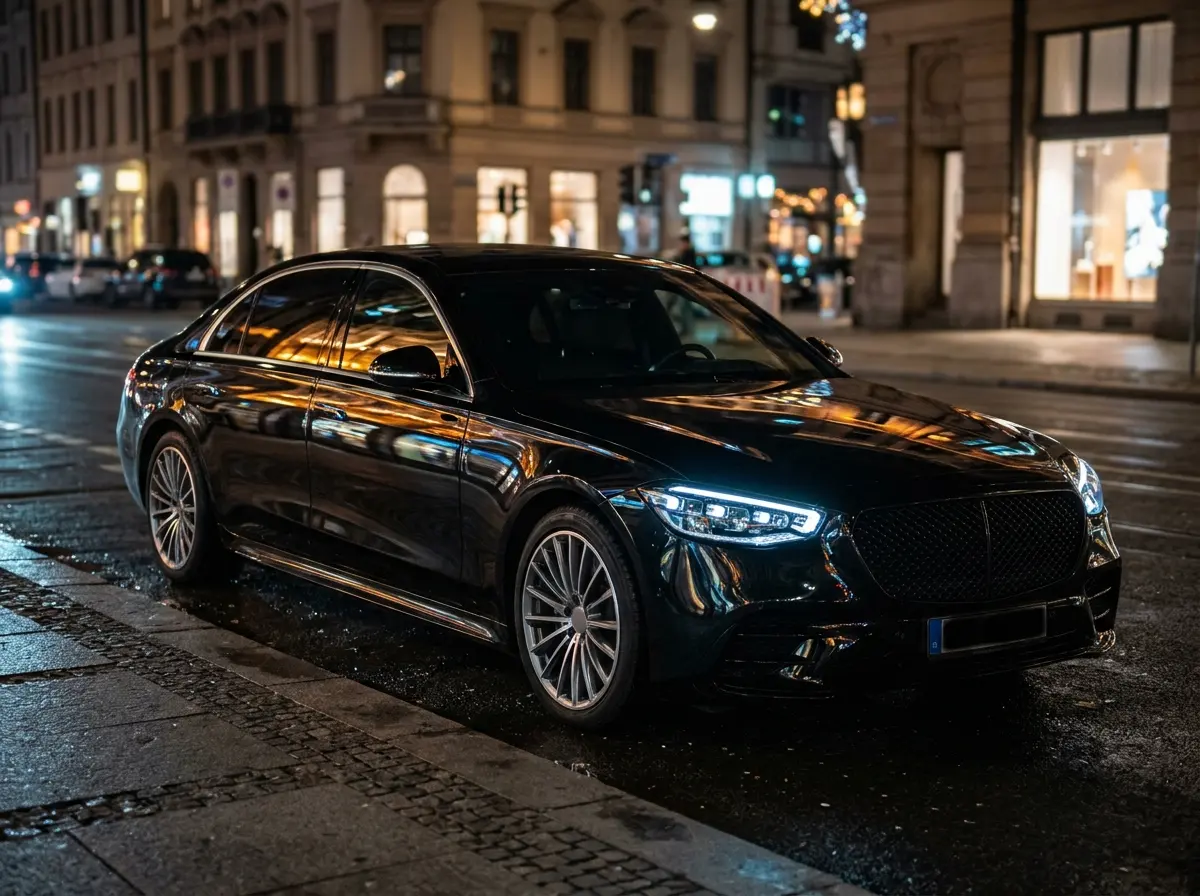 Illustrative image
Quick answer
Luxury sedan service is chauffeured transportation in a higher-category sedan for one to three passengers, used for board members, senior executives, keynote speakers and VIP clients when presentation matters. Corporate Travel USA coordinates luxury sedans nationally through owned operations or vetted local partners, confirming the category per market, and prices each trip or program by proposal.
Luxury sedans carry the same typical one to three passengers as the executive tier. The difference is the vehicle category and the service expectations around it, not the seat count. In practice a luxury sedan often has more rear-seat room and less cargo space, so luggage deserves attention.
We describe the Luxury tier as a category, confirmed per market, and we avoid promising specific amenities. Interior features, drinks, connectivity and similar details differ by vehicle and operator. If a particular feature matters to your traveler, list it as a requirement in your request and we will confirm in the proposal whether the market can meet it.
Luxury suits passengers where the vehicle is part of the message: investor meetings, board travel, high-profile guests, or any occasion where an executive assistant would otherwise spend hours vetting the car. It is rarely the right choice for routine, high-volume travel, where the Executive tier is more economical.
Where luxury sedan service earns its place
Board and C-suite travel
Senior leaders moving between airports, offices and offsites often get the Luxury tier as a standing preference in the travel program, subject to market confirmation.
VIP and keynote speaker transfers
Speakers and special guests are met, driven to the venue and returned on a schedule agreed with the organizer. A named contact and backup plan are included in the planning.
Investor and client hospitality
For a dinner or a closing event, a luxury sedan makes the transfer part of the hospitality. Plan the pickup window with a margin for the unexpected.
Confidential travel
Passengers who need to work privately in the vehicle benefit from a driver briefed on discretion. Your handling expectations can be written into the booking notes.
Luxury sedan supply, luggage and policy limits
What Luxury means in your market
Luxury is confirmed per market because the vehicles available in a small city differ from those in a major hub. Ask for the vehicle category in writing for each location.
Luggage trade-off
Some luxury sedans offer generous rear seats but modest trunk space. Share the bag count in your request, and we will advise whether to add a second vehicle or switch to an SUV.
Cost and policy
The Luxury tier is priced higher than Executive. Many corporate policies reserve it for named roles or occasions. A simple tiering rule in your program avoids disputes later.
Lead time
Premium supply is thinner than standard supply in most cities. Book earlier for Luxury, especially around major events.
Executive vs luxury sedan: what is the difference?
The difference between an executive and a luxury sedan is the vehicle class and the service expectations around it, not the number of seats: both typically carry one to three passengers. Luxury is a higher category with thinner supply, priced above Executive and confirmed per market.
In practice a luxury sedan often gives more rear-seat room and less trunk space, so luggage needs more attention, not less. Service expectations for the Luxury tier, such as a driver briefed on discretion or a named contact for the trip, are written into the booking rather than assumed.
If you are building a travel program, the cleanest approach is to make Executive the default and define exactly when Luxury applies. The table below sets out the practical differences buyers usually weigh.
| Factor | Executive sedan | Luxury sedan |
|---|---|---|
| Typical passengers | 1-3 | 1-3 |
| Vehicle class | Business-class sedan | Higher-category sedan |
| Luggage | Typically 2-3 suitcases | Rear-seat space often favored over trunk space |
| Supply | Widely available | Thinner, especially in smaller markets |
| Typical use | Routine business travel | Board, VIP, investor and speaker travel |
| Policy | Default tier for most travelers | Often reserved for named roles or occasions |
When is luxury sedan service worth the higher price?
Luxury sedan service is worth it when the passenger or the occasion makes the vehicle part of the message: board members, investors, keynote speakers and clients you are hosting. For routine, high-volume travel, the Executive tier usually does the job at lower cost.
A simple tiering rule keeps the decision out of the inbox. A common approach is to name the roles that may book Luxury by default and the occasions that justify it for anyone else, and to leave every other trip on Executive. Written into the program, that rule makes approvals quick and keeps spend predictable.
The rule also helps the operator. When the Luxury bookings are predictable, premium vehicles can be requested earlier, which matters in markets where that supply is limited.
- Board members and named C-suite roles
- Keynote speakers and VIP guests the company is hosting
- Investor meetings, closings and client hospitality events
- Trips where the passenger needs to work privately in the vehicle
Related:Client and guest transportationExecutive transportation retainers
What to put in a luxury sedan request
A luxury sedan request should name the passenger's role, the timing, the bag count, any discretion or contact requirements and any vehicle preference, so the proposal can confirm what the market can deliver. Preferences for a make or a feature are recorded as requirements, not assumed.
It is also reasonable to ask who operates the car. FMCSA's passenger carrier guidance says that, unless an exemption applies, for-hire passenger carriers working across state lines need FMCSA operating authority and minimum insurance of $1.5 million for vehicles carrying 15 or fewer passengers, including the driver. Local for-hire licensing for trips within a city or state varies by market, which is one reason the operator is confirmed per market.
- Passenger name and role, and the on-the-day contact
- Flight or meeting times, with the latest acceptable arrival
- Bag count and sizes
- Discretion, greeting and contact preferences
- Vehicle or feature preferences, marked must-have or nice-to-have
- Billing reference or cost center
Corporate programs that use luxury sedans
- Executive Chauffeur ServiceProfessional chauffeured transportation for executives, coordinated nationwide and confirmed market by market at proposal stage.
- Corporate Airport TransfersAirport car service for business travelers: flight-tracked pickups, a clear meeting point at the terminal and a plan for delays.
- Private Aviation TransfersPrivate jet car service to and from FBOs and private terminals, planned around ramp access, flexible timing and passenger privacy.
- Client & Guest TransportationVIP transportation for the clients, candidates and visitors your company hosts, arranged in your name and billed to your account.
- Hourly & Dedicated ChauffeurHourly chauffeur service: a car and driver held as directed for a day, or one dedicated chauffeur for a week of visits.
- VIP Delegation TransportationProtocol-aware transportation for executive delegations and visiting dignitaries, with discreet vehicles and security coordination.
- Executive Transportation RetainersA standing arrangement for executive chauffeured transportation, planned around leadership calendars and scoped by proposal.
- Hotels and HospitalityGround transportation capacity for hotels and resorts: outsourced or overflow shuttle runs, group-block arrivals and guest car service.
Luxury sedan service FAQs
What makes a luxury sedan different from an executive sedan?
The vehicle class and service expectations. Seat capacity is typically the same, one to three passengers. The specific differences are confirmed per market rather than promised in advance.
Can we book a particular model?
You can record a preference, and the proposal will say whether the market can meet it. Models are not promised in advance, because supply is confirmed per market.
Are luxury sedans available in every city?
Not necessarily. Supply varies by market, and we say so in the proposal if a location cannot meet the Luxury category.
When should a company choose Luxury over Executive?
When presentation matters to the passenger or the occasion: board travel, VIP guests, investor events. For routine travel the Executive tier is usually enough.
Is luxury sedan service suitable for confidential travel?
Yes, when the requirements are written down. Discretion expectations, such as how the driver makes contact and what is never discussed, go into the booking notes and are briefed to the operator before the trip.
Sources and references
- Passenger Carrier Guidance Fact Sheet, Federal Motor Carrier Safety Administration (FMCSA)
Need luxury sedans in your market?
Tell us the city, dates and headcount. We will confirm what is available and propose the right mix.