Events and groups
Sporting event transportation for corporate hospitality groups
Stadium days are won or lost at the curb. We plan drop-off zones, credentialed access and the post-game exit so your guests get in comfortably and out without a long wait.
Updated
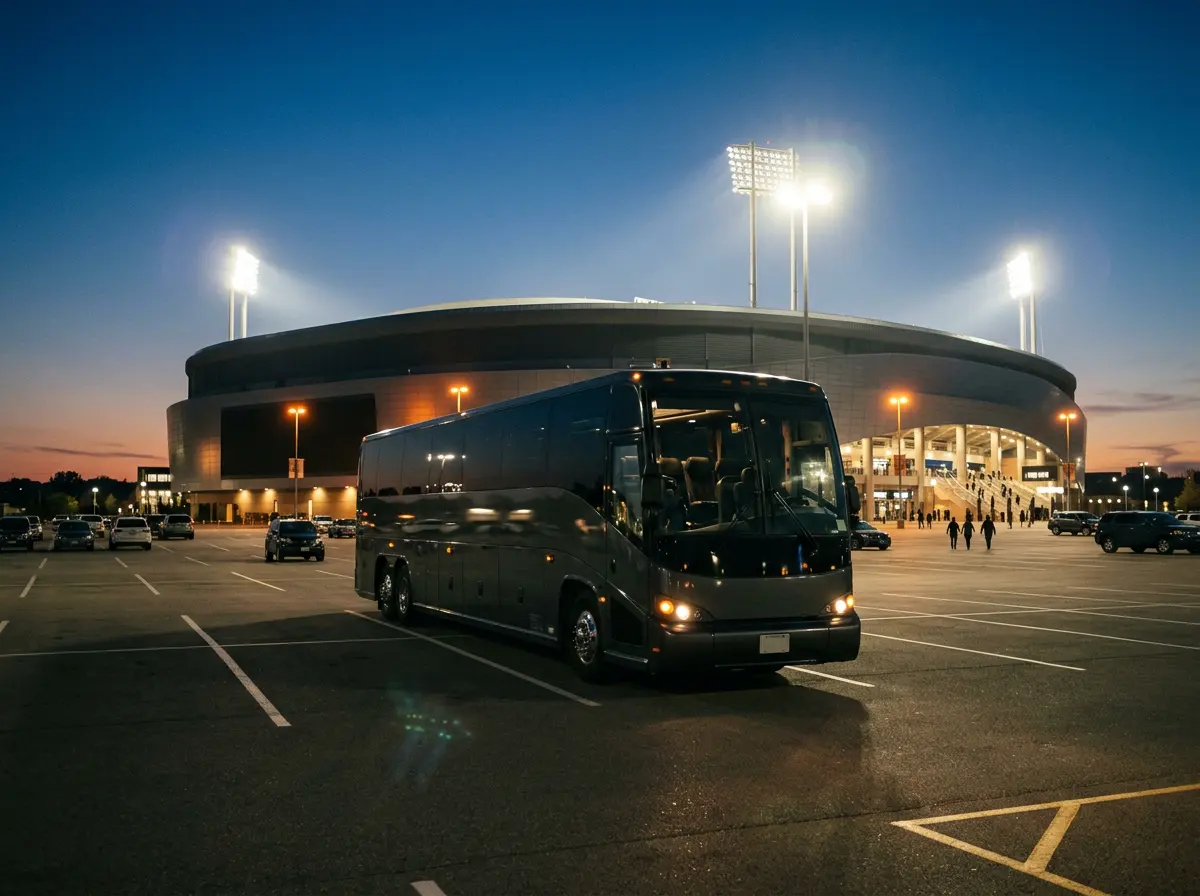 Illustrative image
Quick answer
Sporting event transportation moves corporate hospitality guests, client groups and company outings to stadiums and arenas and back, using the venue's drop-off zones, staging lots and credentialed lanes. Corporate Travel USA plans arrival, staging and the post-game exit, and coordinates delivery through owned operations or qualified local partners confirmed per market. Pricing is by proposal.
How it works
How sporting event transportation works
Stadiums and arenas have their own traffic rules. Road closures, event-day perimeter controls and designated vehicle zones differ from venue to venue and sometimes game to game. A driver who has not been briefed on the day's rules may be turned away from the very entrance the guests expect. The first step in planning is getting the venue's transportation guidance for the specific event.
Corporate hospitality groups usually enter through a specific gate or a suite-level entrance, not the general admission turnstiles. Drop-off is a defined zone, sometimes with a credential check. We collect the access information, brief drivers and place the vehicle in the right lane. Guests arrive at the door, not at the far end of a parking lot.
The exit is the harder problem. When tens of thousands of people leave together, vehicles cannot get close. Options include a staging area away from the stadium with a short walk, a delayed departure that waits for the crowd to thin, or a hospitality lounge that keeps guests inside until traffic eases. We discuss these trade-offs rather than promising an easy exit.
Sporting event transportation: where it fits
Client hospitality at games
Hosts bring clients to suites or club seating. Vehicles arrive at the hospitality entrance and wait at a staging point.
Team and company outings
A department attends a game together. A coach or van shuttles from the office and back.
Sponsor group transportation
Sponsors move guests between a pre-game event and the stadium on a fixed schedule.
Tournament and championship weekends
Multiple days and venues. See multi-day event transportation for the day-by-day grid approach.
VIP and executive guests
Senior guests arrive in separate smaller vehicles that use a credentialed lane where available.
What we plan for in sporting event transportation
The vehicle is the easy part. These are the operational details that decide whether the program runs on time.
- 01
Venue transportation rules
We request the venue's event-day guidance on drop zones, parking passes, staging lots and road closures. These rules can change between events.
- 02
Credentials and passes
Vehicles may need a pass or credential to enter restricted lanes. We ask who issues them and how far in advance they must be requested.
- 03
Staging distance
Staging lots may be a distance from the gates. Guests need to know where the vehicle waits and how to contact the driver.
- 04
Exit strategy
We agree on whether to leave immediately, wait for the crowd to disperse or use an alternate pickup point. The plan accounts for weather and game length.
- 05
Overtime risk
Games can run long. We agree standby terms in advance so a delay does not create a dispute.
Game day transportation: how do stadium drop-off and pickup zones work?
On game day, stadiums and local agencies assign vehicles to specific zones: rideshare and taxi areas, bus and charter lots, and sometimes a credentialed lane for suites and hospitality entrances. A vehicle without the right pass or briefing can be turned away from the entrance your guests expect, so the zone plan is confirmed for each event, not assumed from the last one.
Drop-off is usually the easier half, because traffic arrives over a longer period and a briefed driver can reach the assigned zone. Pickup is harder: vehicles often cannot wait at the zone during the game, so they hold at a staging lot and are called forward, or guests walk to a meeting point. We confirm which applies, how far the walk is and how guests reach their driver.
- Which zone or gate serves your suite, club or hospitality entrance
- Whether vehicles need a parking pass or credential, who issues it and by when
- Where vehicles stage during the game and how they are called forward
- Road closures and perimeter times on the day
- The accessible drop-off and pickup point
How do you plan the post-game departure?
Plan the post-game departure before the game by choosing an exit strategy with the host: leave before the final whistle, wait in hospitality until traffic thins, walk to a staging point outside the closures, or split the group. FHWA's guidance on planned special events notes that recurring events at permanent venues demand maximum service at the end of the event, which is why the exit, not the arrival, sets the plan.
Overtime and weather change the timing, so standby terms are agreed in advance and the dispatcher, not each driver, decides when to call vehicles forward from staging.
| Exit strategy | Works well when | Trade-off |
|---|---|---|
| Leave early | Guests have flights or long drives home | They miss the finish |
| Hold in hospitality | The suite or lounge stays open after the game | Later arrival home; more standby time |
| Walk to remote staging | Staging sits outside the traffic perimeter | A walk in the weather; needs a clear meeting point |
| Split by group | Executives and a larger group leave on different timings | More coordination for the dispatcher |
When does a stadium shuttle service make sense for a company group?
A stadium shuttle service makes sense when a company group starts from one or two places, such as an office, hotel or pre-game reception, and travels together. One or two larger vehicles replace dozens of individual rides, use the bus or charter area instead of the rideshare queue, and bring the group back together afterwards.
Illustrative example (a planning sketch, not a past event): 90 guests attend a pre-game reception at a hotel 20 minutes from the stadium. Two full-size coaches leave well before the start, hold at the charter lot during the game and load at a named meeting point afterwards, while six guests with early flights use two SUVs that leave before the final period.
Related:MotorcoachesMulti-day events
Vehicle categories
Vehicles for sporting event transportation
Categories, not guarantees. Availability varies by market and is confirmed in your proposal.
Executive Sedans
Typically 1-3 passengers
Chauffeured business-class sedans for individual executives and small teams on airport, meeting and city-to-city runs.
Executive SUVs
Typically 1-6 passengers depending on SUV class and luggage
Chauffeured business SUVs for small teams, extra luggage and travelers who want more space.
Luxury SUVs
Typically 1-6 passengers depending on SUV class and luggage
A premium, chauffeured SUV category for VIP guests, delegations and executives who need space and presentation.
Executive Sprinter Vans
Typically 9-14 passengers depending on configuration
Chauffeured Sprinter-class vans that keep a mid-size team together on airport runs, offsites and meeting days.
Minibuses
Roughly 20-35 passengers depending on vehicle type and layout
Chauffeured minibuses for groups of roughly 20-35: conference loops, offsites, employee routes and airport groups.
Motorcoaches
Roughly 47-56 passengers per full-size coach
Chauffeured charter buses for large groups, conventions, offsites and multi-city movements, quoted per itinerary.
How a sporting event transportation engagement works
- 1
Event and access
You share the event, hospitality location and guest count. We request the venue's transportation guidance.
- 2
Drop and stage plan
We propose drop zones, staging lots, vehicle mix and an exit strategy.
- 3
Pass and brief
Required passes are requested, and drivers are briefed on gate, lane and pickup details.
- 4
Game-day dispatch
A dispatcher coordinates arrivals, holds vehicles at staging and releases them for the exit.
Sporting event transportation: procurement and billing
- Pricing by proposal; standby and overtime terms stated in advance
- Vehicle pass or credential costs, if any, are identified in planning
- Insurance certificates on request for venue vendor approval
- Guest-list details are handled according to your instructions
Sporting event transportation FAQs
Can the vehicle wait right outside the stadium?
Rarely. Most venues limit waiting near the gates on event days. We use designated staging areas and coordinate guest pickup by phone or at a defined point.
How early should guests leave for the stadium?
Earlier than for a normal dinner, because perimeter closures and security screening slow the last mile on game day. We set departure times from the venue's guidance for that event and the distance from your starting point.
What if the game goes into overtime?
Standby terms are agreed before the event. We keep the vehicle through the end and, where possible, hold the exit plan flexible.
How much does sporting event transportation cost?
The main drivers are total hours including standby during the game, vehicle class, passes or parking, overtime terms and high-demand dates. We price by proposal.
Do you handle tickets or hospitality?
No. We provide ground transportation only. Tickets and hospitality are arranged separately by your team.
How do you get guests out after the game?
We set an exit approach in advance: an early departure, a delayed pickup or an alternate staging point. Each has trade-offs that depend on the venue.
Sources and references
- Managing Travel for Planned Special Events Handbook, Chapter Six: Traffic Management Plan, Federal Highway Administration (FHWA)
Next step
Request an event transportation proposal
Tell us about the event, the movements and the passenger count. We will reply with a proposal for review.
We do not publish a response-time promise until it is operationally confirmed. Time-sensitive request? Say so in the notes.
Start your request
More like sporting event transportation
- Multi-Day Event TransportationDay-by-day fleet and driver planning for events that run several days across multiple venues.
- Large Group TransportationMoving a large group on a schedule: motorcoach and van mixes, wave planning and spare capacity.
- Client & Guest TransportationVIP transportation for the clients, candidates and visitors your company hosts, arranged in your name and billed to your account.
- Corporate Event AgenciesA ground transportation provider for event agencies and DMCs: attendee flows, run-of-show timing and itemized proposals that fit the client budget.
- Fleet luxury suvs
- Get a quote