Events and groups
Corporate holiday party transportation, booked before peak nights fill
December evenings are among the busiest nights of the year for event vehicles in many markets. We plan holiday transportation early and build a staggered exit so the end of the party does not create a curb crush.
Updated
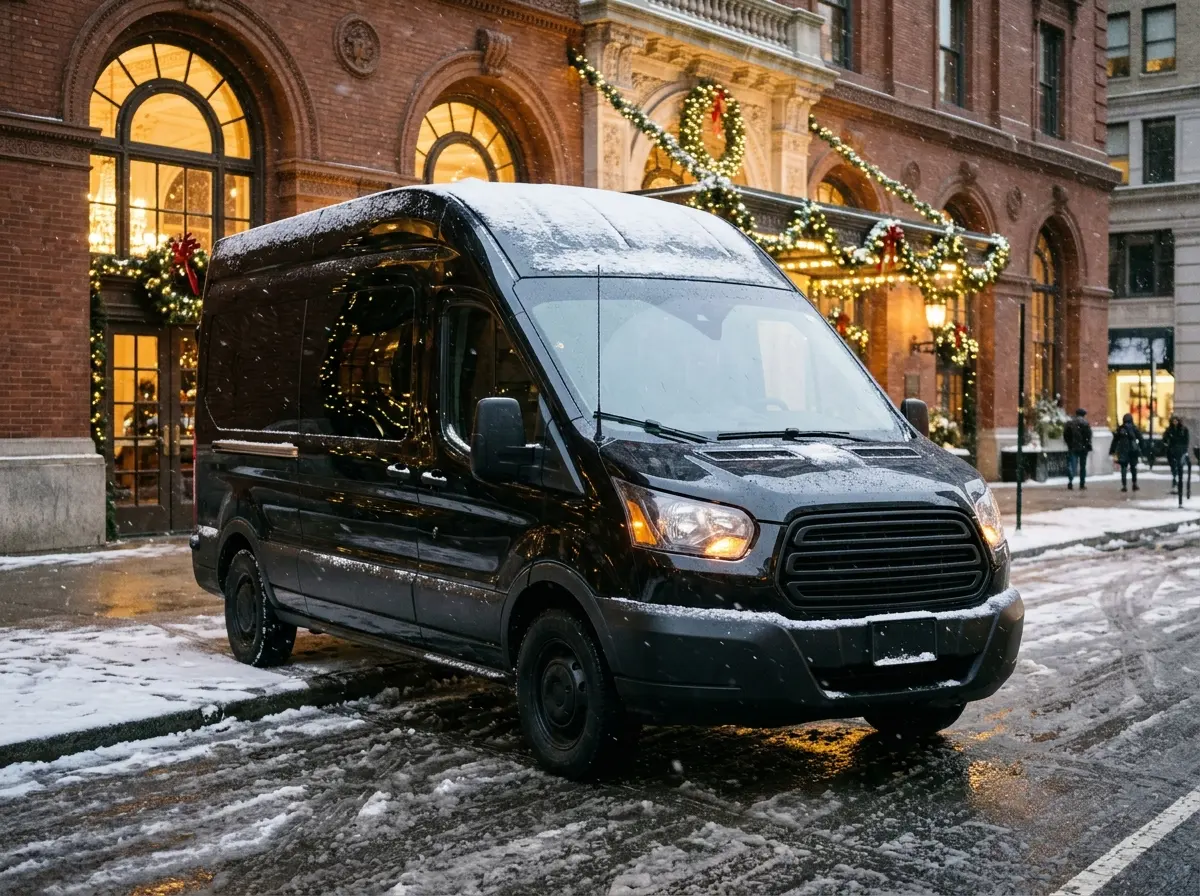 Illustrative image
Quick answer
Corporate holiday party transportation gets employees and guests to a year-end party and home again, with arrival shuttles, a staggered schedule of return runs and an on-request ride-home option. It suits company parties, client dinners and hotel galas. Corporate Travel USA plans the evening and coordinates delivery through owned operations or qualified local partners confirmed per market. Pricing is by proposal.
How it works
How corporate holiday party transportation works
Holiday events concentrate demand into a few evenings. Many companies choose the same Thursday and Friday in December, so local vehicle supply is stretched in the same hours across a city. The planning lesson is simple: commit early. Late requests for evening vehicles may not be filled, or may be filled with less suitable options.
The end of the party is the hard part. If 150 guests leave at 10:00 p.m. and each needs a vehicle, the curb becomes the bottleneck. We solve this with a staggered exit: scheduled departures every 15 to 20 minutes, a visible queue, and a mix of larger vehicles for group destinations and smaller ones for individual trips.
Holiday events also bring weather. Snow, ice and early darkness change drive times, especially for rural or suburban destinations. We build margin into pickup times and keep a reserve vehicle for delayed runs. Alcohol is often served, so we recommend a defined ride-home program and a clear message to guests about where to find it.
Corporate holiday party transportation: where it fits
Company holiday parties at venues
Staff arrive in waves and leave in a surge. Coaches or vans shuttle between offices or hotels and the venue.
Client appreciation dinners
Smaller, more formal events with executive vehicles and named drivers.
Departmental parties and team dinners
Several small events on the same night. We coordinate vehicles across parties to use supply efficiently.
Hotel-based holiday galas
Out-of-town staff stay at the hotel. Shuttles bridge any distance between lodging and the event.
After-party and late rides
A limited number of vehicles stay on after the main event ends for guests who stay late.
What we plan for in corporate holiday party transportation
The vehicle is the easy part. These are the operational details that decide whether the program runs on time.
- 01
Early commitment
Peak December dates fill. We recommend confirming dates, venues and headcount ranges as early as possible and reconfirming a few days before.
- 02
Staggered exit
Departure times are posted and announced, with the first vehicle leaving before the party winds down. This breaks up the single curb peak.
- 03
Weather margin
We build extra pickup time into winter evenings and hold a spare vehicle for delays.
- 04
Designated ride-home
We recommend a defined ride-home option. Your HR or legal team sets policy. We carry out the plan and keep a manifest of who rides.
- 05
Minimum hours
Peak evenings may carry minimum booking hours. Any such term is stated in the proposal.
When should holiday party transportation be booked?
Book holiday party transportation as soon as the date and venue are fixed, because many companies choose the same December Thursdays and Fridays and local vehicle supply is shared across the city on those evenings. Booking early secures vehicles without locking the headcount; numbers are reconfirmed a few days before the party.
- Lock early: date, venue, start and end times, a headcount range and pickup points
- Reconfirm in the final days: headcount by pickup point, return-run times and ride-home requests
- Agree in writing: minimum hours on peak nights, weather cancellation terms and waiting charges
How do return runs work late at night?
Late-night return runs work as a posted schedule of departures that starts before the party winds down and ends with a clearly stated last run, backed by a small pool of vehicles for on-request rides home. Spreading departures breaks up the single curb rush at the end of the night.
Illustrative example (a planning sketch, not a quote): for 150 guests at a party ending at 11:00 p.m., coaches or minibuses leave for the main office and a transit hub at 9:30, 10:00, 10:30, 11:00 and 11:20, while three or four sedans or SUVs take guests whose homes are off the hub routes.
The reason to plan this carefully is not convenience. NHTSA reports that 11,904 people died in alcohol-impaired-driving crashes in the United States in 2024, about one person every 44 minutes. The employer sets the ride-home policy; we carry it out and keep a manifest of who rode.
Vehicle categories
Vehicles for corporate holiday party transportation
Categories, not guarantees. Availability varies by market and is confirmed in your proposal.
Executive Sedans
Typically 1-3 passengers
Chauffeured business-class sedans for individual executives and small teams on airport, meeting and city-to-city runs.
Executive SUVs
Typically 1-6 passengers depending on SUV class and luggage
Chauffeured business SUVs for small teams, extra luggage and travelers who want more space.
Executive Sprinter Vans
Typically 9-14 passengers depending on configuration
Chauffeured Sprinter-class vans that keep a mid-size team together on airport runs, offsites and meeting days.
Minibuses
Roughly 20-35 passengers depending on vehicle type and layout
Chauffeured minibuses for groups of roughly 20-35: conference loops, offsites, employee routes and airport groups.
Motorcoaches
Roughly 47-56 passengers per full-size coach
Chauffeured charter buses for large groups, conventions, offsites and multi-city movements, quoted per itinerary.
How a corporate holiday party transportation engagement works
- 1
Date and venue
You confirm the date, venue, estimated headcount and where guests are coming from.
- 2
Exit plan
We design arrival shuttles and a staggered return with a reserve for delays.
- 3
Reconfirm
We reconfirm numbers and times a few days before, when headcount is firmer.
- 4
Evening dispatch
A dispatcher runs the evening and adjusts departures to match the party's end.
Corporate holiday party transportation: procurement and billing
- Pricing by proposal; peak-date terms and minimums are stated up front
- Charges can be allocated to the event cost centre
- Insurance certificates on request for venue approval
- Cancellation terms for weather are set out in the proposal
Corporate holiday party transportation FAQs
How early should we book for December?
As early as dates are fixed. Peak evenings fill, and supply varies by market. We cannot promise availability, but early requests give the best chance.
How do we avoid a long wait when the party ends?
Stagger departures. Offer scheduled runs every 15 to 20 minutes from before the end of the party, and keep a few vehicles on standby.
What about winter weather?
We add time to pickup schedules, keep a reserve vehicle and agree a delay threshold. Cancellation terms for severe weather are in the proposal.
Can we offer rides only to people who need them?
Yes. A request-based ride-home program is possible, using a dispatch number and a small pool of vehicles.
Can several departmental parties share vehicles on the same night?
Often, yes. If parties are close in time and place, one dispatcher can move vehicles between them, which uses scarce peak-night supply more efficiently. We check the timings before proposing it.
Sources and references
- Drunk Driving: Statistics and Resources, National Highway Traffic Safety Administration (NHTSA)
Next step
Request an event transportation proposal
Tell us about the event, the movements and the passenger count. We will reply with a proposal for review.
We do not publish a response-time promise until it is operationally confirmed. Time-sensitive request? Say so in the notes.
Start your request
More like corporate holiday party transportation
- Employee Appreciation EventsTransportation for employee appreciation days, off-site celebrations and recognition events that move many staff at once.
- Large Group TransportationMoving a large group on a schedule: motorcoach and van mixes, wave planning and spare capacity.
- Corporate Event TransportationPlanned ground transportation for corporate events: routes, loading zones, manifests and a dispatcher on the day.
- Hotels and HospitalityGround transportation capacity for hotels and resorts: outsourced or overflow shuttle runs, group-block arrivals and guest car service.
- Resources transportation duty of care
- Get a quote