Events and groups
Convention shuttle service that keeps every hotel block connected
A convention shuttle is a timetable problem. We design the loop, the interval between vehicles and the fleet size so attendees do not wait long at any hotel.
Updated
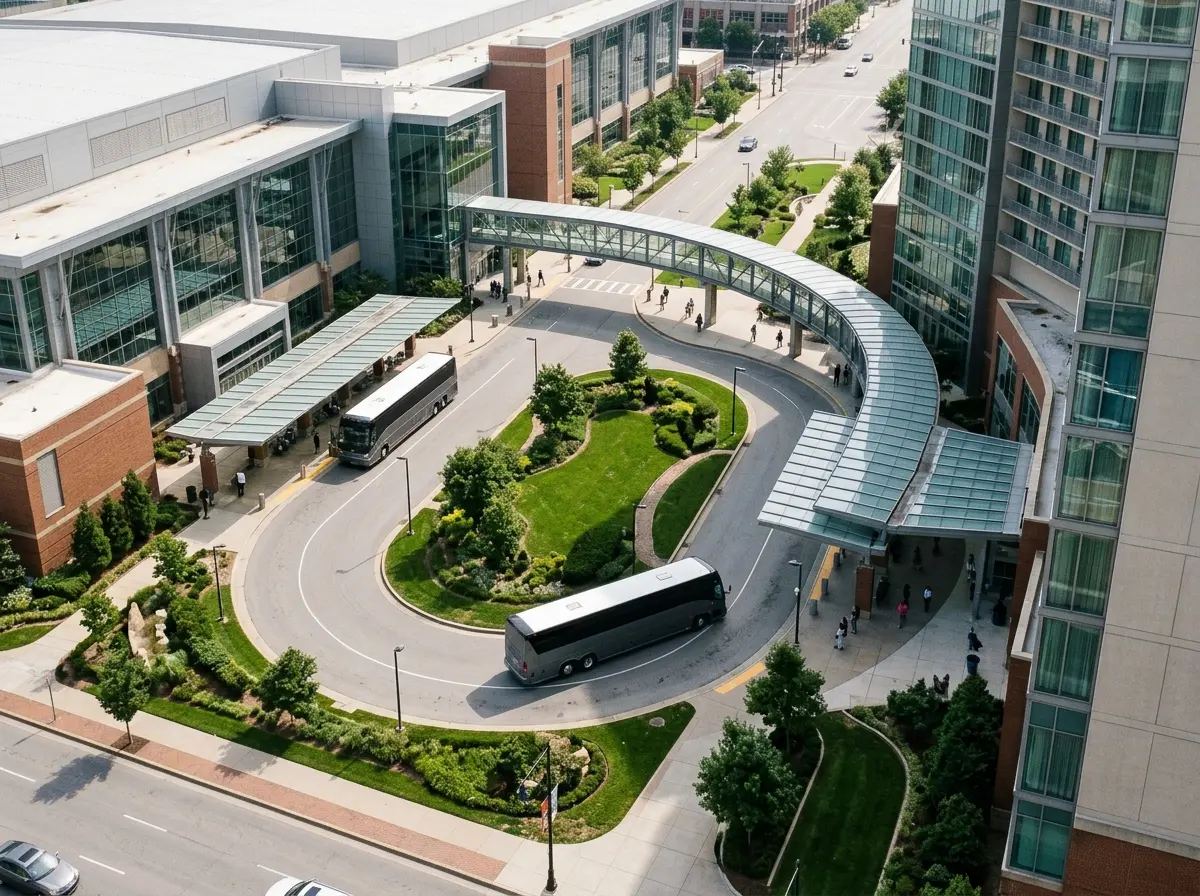 Illustrative image
Quick answer
A convention shuttle service is a continuous loop of vehicles running between hotel blocks and the convention venue at a set interval, so attendees walk to a stop and board the next vehicle without booking. It suits conventions and large association meetings. Corporate Travel USA designs the loop and coordinates delivery through owned operations or qualified local partners confirmed per market. Pricing is by proposal.
How it works
How convention shuttle service works
The defining feature of a convention shuttle is continuity. Vehicles do not wait for a full load; they run a fixed circuit between hotel stops and the venue entrance, all day, at an interval everyone can learn. Attendees do not book a seat. They walk to the stop and the next vehicle arrives.
Fleet size follows from the loop. If the circuit takes 40 minutes round trip and you want a vehicle every 10 minutes at each stop, you need about four vehicles on the loop, plus extra to cover dwell time and peak demand. Add a reserve vehicle so one breakdown or one longer-than-expected stop does not stretch the interval.
The loop changes shape across the day. Morning peaks run toward the venue and evening peaks run away from it. We often shorten the interval at those times and lengthen it mid-day, or swap in a larger vehicle for peak hours. We also plan the loop for the venue's constraints: a single curbside bay can only serve so many vehicles per hour.
Convention shuttle service: where it fits
Multi-hotel conventions
Several host hotels each contribute attendees. One loop touches each block and ends at the venue entrance.
Trade association conventions
Attendance swells for general sessions and drops during breakouts. The interval adjusts with the session schedule.
Sales kickoffs at resort venues
Resort campuses can be large. A simple loop between lodging areas and meeting space replaces ad hoc rides.
Sponsor and exhibitor movements
Sponsors and speakers may use a separate, smaller loop to avoid mixing with general attendees.
Late-night return service
After evening receptions, vehicles run return-only routes on a relaxed interval until the last agreed departure.
What we plan for in convention shuttle service
The vehicle is the easy part. These are the operational details that decide whether the program runs on time.
- 01
Interval and loop time
We calculate loop time with real stop dwell, not just drive time. Vehicles in a loop typically spend a significant share of the cycle loading and unloading.
- 02
Stop design
Each hotel stop needs a legal, safe pull-in zone that does not block the hotel's own traffic. We request a stop location from each hotel and mark it in the driver brief.
- 03
Capacity at peak
We size the fleet for the heaviest 30 minutes, then check whether average demand makes that uneconomical. Larger vehicles at peak and smaller ones off-peak is a common compromise.
- 04
Venue bay limits
Convention centers limit how many shuttles can wait at once. The loop is built so vehicles do not queue on the street.
- 05
Signage and attendee communication
Attendees need simple signage with the interval, pickup point and a contact number. Printed or digital, the material is agreed with your organizer.
How often should convention shuttles run?
Convention shuttles should run often enough that the average wait at a stop is acceptable, and for a regular loop that average wait is roughly half the interval between vehicles. Most programs run short intervals at the morning and evening peaks, longer ones mid-day, and size the fleet to the peak.
Fleet size follows from the interval: vehicles on the loop equals the round-trip time, including dwell at every stop, divided by the interval, rounded up. Then check capacity: seats per hour past a stop equals 60 divided by the interval, times the planning load per vehicle. Those seats are shared by every stop on the loop, so a vehicle that fills at the first hotel has nothing left for the second.
Add a reserve vehicle so a breakdown or a long dwell does not stretch the interval, and check the venue end: a single curb bay can only turn so many vehicles an hour, and a loop that outruns the bay ends up queuing in the street.
| Target interval | Vehicles on the loop | Seats per hour past each stop | Average wait (rule of thumb) |
|---|---|---|---|
| 8 minutes | 6 | About 345 | About 4 minutes |
| 12 minutes | 4 | About 230 | About 6 minutes |
| 16 minutes | 3 | About 170 | About 8 minutes |
How do hotel-block loops work?
Hotel-block loops group nearby hotels onto one route that ends at the venue entrance, with each hotel's stop at a pull-in point the hotel has approved. The order of stops and the number of hotels on each loop decide whether the last stop still gets a seat at the peak.
Reverse the logic for the evening. Vehicles fill at the venue, so the order of drop-offs matters less than how often vehicles leave the venue curb, and the last departure time must be posted clearly.
- Keep loops short: every added stop adds dwell time and stretches the interval; past a few stops, a second route is usually better
- Give the largest block its own route, or make it the first stop, so vehicles do not arrive there already full
- Run peak-only express trips from the largest block when the loop alone cannot carry the morning surge
- Confirm each hotel's pull-in point in writing; a stop that blocks the hotel's own driveway gets moved on the day
- Serve hotels within a short, safe walk with a walking route and an accessible vehicle on call instead of a stop
Convention transportation beyond the shuttle loop
Convention transportation usually needs more than the loop: airport arrival waves on the first day, late-evening returns after receptions, separate vehicles for speakers and sponsors, and accessible service on every route. Planning these as separate layers stops one problem from consuming the loop's vehicles.
Accessible service needs early notice. Under DOT ADA rules as summarized by FMCSA, charter motorcoach operators may require 48 hours' advance notice to provide transportation to passengers with disabilities, and lift boarding adds dwell time that the loop must absorb. Signage closes the plan: each stop shows the route, the interval, the hours and a number to call.
Vehicle categories
Vehicles for convention shuttle service
Categories, not guarantees. Availability varies by market and is confirmed in your proposal.
Executive Sprinter Vans
Typically 9-14 passengers depending on configuration
Chauffeured Sprinter-class vans that keep a mid-size team together on airport runs, offsites and meeting days.
Minibuses
Roughly 20-35 passengers depending on vehicle type and layout
Chauffeured minibuses for groups of roughly 20-35: conference loops, offsites, employee routes and airport groups.
Motorcoaches
Roughly 47-56 passengers per full-size coach
Chauffeured charter buses for large groups, conventions, offsites and multi-city movements, quoted per itinerary.
How a convention shuttle service engagement works
- 1
Map the blocks
We collect hotel names, block sizes, the venue entrance and the shuttle hours you want.
- 2
Design the loop
We calculate loop time, interval, fleet size and reserve, and propose how the interval changes through the day.
- 3
Stops and signage
Stop locations are confirmed with hotels and the venue, and signage content is agreed.
- 4
Run and tune
A dispatcher watches the loop in real time and adjusts the interval or swaps vehicles when ridership differs from plan.
Convention shuttle service: procurement and billing
- Pricing by proposal, typically structured around vehicle hours across the shuttle window
- Sponsorship or cost allocation across departments can be reflected in invoicing; scoped in proposal
- Insurance certificates on request for hotel and venue approval
- Ridership summaries are a program option that we scope in a proposal
Convention shuttle service FAQs
How many vehicles does a convention loop need?
Loop time divided by the target interval, rounded up, plus a reserve vehicle. A 48-minute loop at a 12-minute interval needs 4 vehicles plus a reserve. We calculate this from your actual hotel and venue locations rather than a generic figure.
Is a loop better than scheduled trips?
For dense, continuous flows, yes. Attendees do not need to learn a timetable. Scheduled trips suit smaller blocks or long distances. See conference transportation for the mixed approach.
What hours should the shuttle run?
From about an hour before the first major session to after the last one ends, with a reduced interval mid-day and a stated last departure after evening events. The exact hours follow your agenda and each hotel's distance.
How much does a convention shuttle service cost?
Cost follows vehicle hours: the number of vehicles on the loop at each time of day, how long the shuttle runs, the reserve, and dates. A longer mid-day interval or smaller off-peak vehicles reduce cost. We price by proposal.
Can you add a hotel mid-event?
Often yes, if the stop is feasible and capacity allows, but it changes loop time. Changes are made by the dispatcher in agreement with your organizer.
What about accessible vehicles on the loop?
Tell us early. Lift-equipped vehicles are sourced specifically for the dates and market, and the loop plan must account for the extra dwell time they need.
Sources and references
- Accessibility for Buses: Americans with Disabilities Act (ADA) Regulations and Rights, Federal Motor Carrier Safety Administration (FMCSA)
Next step
Request an event transportation proposal
Tell us about the event, the movements and the passenger count. We will reply with a proposal for review.
We do not publish a response-time promise until it is operationally confirmed. Time-sensitive request? Say so in the notes.
Start your request
More like convention shuttle service
- Conference TransportationHotel-to-venue shuttles, airport arrivals and session-driven peaks planned for multi-day conferences.
- Trade Show TransportationExhibitor and staff transportation for trade shows: early setup peaks, teardown surges and booth-crew timing.
- Large Group TransportationMoving a large group on a schedule: motorcoach and van mixes, wave planning and spare capacity.
- Fleet motorcoaches
- Fleet minibuses
- Resources conference shuttle planning checklist